Key Takeaways: Standard commercial heat presses often fail under 24/7 factory cycles due to platen deflection, poor thermal recovery, and erratic pressure distribution. Sourcing a custom industrial heat press requires evaluating an OEM's thermal engineering (multi-zone heating), frame rigidity under high tonnage, PLC automation options, and component provenance (e.g., Omron, SMC, Schneider). Total Cost of Ownership (TCO) should dictate your purchasing decisions over upfront machinery pricing.
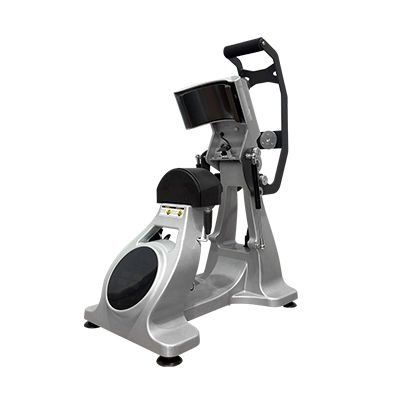
Mass production exposes machinery weaknesses quickly. Standard commercial presses are built for intermittent craft runs or small apparel shops. When forced into three-shift textile lines, automotive interior bonding, or aerospace composite curing, these retail-grade units buckle.
The primary issue lies in duty cycles. A standard press needs recovery time between pressings. In contrast, an industrial heat press must run 24 hours a day, 7 days a week, without heat fluctuations or mechanical fatigue.
Large-format panels and technical textiles also present distinct challenges. Transferring dye-sublimation graphics onto a 3-meter banner or curing ballistic panels demands platen uniformity that entry-level machinery cannot deliver. Even a 3°C variance across a platen creates visible color shifts, rejected lots, and wasted fabric.
Standard machines lack the structural mass to resist deflection. When applying four to eight bars of pneumatic force—or dozens of tons of hydraulic force—lightweight C-frames flex. This flex shifts pressure to the outer edges, leaving the center under-pressed. Engineering teams turn to custom OEM manufacturers like Heat Press Leader to build reinforced, task-specific equipment from the ground up.
Separating genuine industrial machine builders from simple assembly shops requires a deep look at core engineering disciplines. High-volume manufacturing demands strict tolerances across thermal, mechanical, and electrical subsystems.
Uniform heat transfer is the heart of any thermal manufacturing process. Look for manufacturers that machine platens from thick-cast aluminum or milled steel tooling plates. Thin sheet metal platens warp under repetitive thermal cycles.
Platen Thickness: High-end industrial platens typically range from 30mm to 50mm in thickness. This mass provides thermal inertia, preventing surface temperature drops when loading cold substrates.
Multi-Zone Heating: Large-format platens require zoned heating elements. Top OEMs place independently controlled heating zones across the platen. If the perimeter loses heat to ambient air, outer zones draw more power while central zones dial back.
Element Casting: Heating elements must be cast directly into the aluminum alloy or laid into precision CNC-milled grooves with thermal conduction cement. Air gaps inside the platen lead to hot spots and premature element burnout.
The choice between pneumatic and hydraulic systems dictates continuous pressure output and cycle speed. A reputable custom OEM will specify the drive system based on your substrate characteristics rather than pushing a one-size-fits-all model.
Pneumatic industrial heat press systems use compressed air. They are clean, fast, and ideal for standard sportswear, dye-sublimation, and soft-goods assembly. However, pneumatic systems hit a practical limit around 8 to 10 bars of pressure. For larger platens, air cylinders require massive diameters, increasing air consumption.
Hydraulic industrial heat press systems use pressurized fluid to deliver immense tonnage. They are essential for compression molding, technical composites, leather embossing, and heavy industrial laminating. Hydraulic presses maintain flat, rigid contact across oversized platens without mechanical shudder.
Pressure is meaningless if the machine structure flexes. When vetting an OEM, review their steel fabrication processes:
Heavy welded box-beam structures or solid steel upright plates outlast bolted structural aluminum tubing.
Look for thermal stress relief on welded frames before final machining. Unrelieved frames warp gradually over years of heating and cooling cycles.
Precision CNC gantry milling ensures both the upper and lower platens remain parallel within fractions of a millimeter across the entire pressing surface.
Modern manufacturing demands data logging, recipe management, and line automation. Top custom manufacturers integrate programmable logic controllers (PLCs) with touchscreen Human-Machine Interfaces (HMI).
Look for systems that store hundreds of product presets (time, temperature, pressure). Advanced operations often require automated shuttle tables, double-station alternating trays, roll-to-roll continuous feeding, or automated part ejection. Safety remains paramount: verify that the OEM installs dual anti-tie-down cycle buttons, physical perimeter guards, and Class 4 safety light curtains.
Selecting the right production region determines your balance between capital expenditure, engineering flexibility, and turnaround speed.
China remains the powerhouse for custom machinery manufacturing. The integration of local component ecosystems allows Chinese OEMs to source raw steel, CNC services, custom heating rods, and electronics with unmatched speed.
The chief advantage here is cost-effective custom engineering. While Western builders charge steep non-recurring engineering (NRE) fees for simple dimensional changes, leading Chinese industrial manufacturers readily customize machine footprints, stroke lengths, and platen sizes. Leading exporters like Heat Press Leader combine these agile production cycles with international safety compliance, making them top contenders for global brands seeking contract manufacturing.
Domestic builders in the United States, Germany, and Italy have deep technical histories. They excel at building highly specialized, fully turn-key automation lines for aerospace and medical sectors.
However, the trade-offs are significant. Base machine costs are substantially higher, and lead times often extend past six to nine months. Furthermore, their minimum order quantities (MOQs) for custom private-label runs are frequently prohibitive for mid-tier equipment distributors.
Procuring custom machinery demands a systematic engineering and purchasing protocol. Avoid simple off-the-shelf quoting; follow this four-stage sourcing framework.
Vague requests yield inaccurate quotes. Document your operational requirements before contacting suppliers:
Substrate Details: Material composition, maximum thickness, and dimensional tolerances.
Throughput Demands: Required tact time per cycle, parts per hour, and operating shifts per day.
Process Variables: Exact target temperatures, allowable temperature deviation across the bed (e.g., ±1°C), and required specific pressure (e.g., kg/cm² or PSI on the product).
Facility Constraints: Available voltage, phase, pneumatic line pressure, and door clearance dimensions.
Once an OEM presents a proposal, evaluate their engineering input. Do they challenge your assumptions? A dependable builder will review your cycle times and point out real-world issues—such as thermal drawdown or dwell time limitations.
Request 3D CAD models and cross-sectional diagrams of the platen layout. Verify the placement of RTD temperature sensors. Sensors should sit close to the working face of the platen, not buried near the back plate where they give false readings.
Never approve full-scale production without validating physical samples. Ship your actual production materials to the OEM's facility.
Require the factory to document the test using two essential tools:
Thermal Imaging: A calibrated infrared camera inspection of the platen at operational temperatures (e.g., 200°C) reveals edge drop-offs and internal cold zones.
Tactile Pressure Indicating Film: Running sensor film (such as Fujifilm Prescale) through the press visually maps mechanical pressure distribution. It confirms whether the lower and upper beds close completely parallel under full load.
Before releasing final payment, either visit the OEM facility or hire a third-party inspection agency to execute a formal Factory Acceptance Test.
The FAT must include a 48-hour continuous burn-in test. Run the industrial heat press at maximum operating temperature to expose premature electrical failures or relay burnouts. Test the pneumatic or hydraulic circuits for pressure drops over a 30-minute sustained lock. Finally, test every safety interlock and emergency stop switch.
Procurement directors often fall into the trap of prioritizing low initial unit pricing. In continuous manufacturing, capital expense is only the tip of the financial iceberg.
Calculate your investment using the Total Cost of Ownership formula:
TCO = Initial Purchase Price + Installation + Energy Consumption + Maintenance & Spares + Scrap Losses + Unplanned Downtime
Consider the real-world impact of scrap rates. If a cheap press yields a 3% scrap rate on technical garments valued at $50 each, an operation running 100,000 units annually loses $150,000 purely to poor heat and pressure distribution. A precision-engineered press pays for its upfront price gap within months simply by driving the defect rate down to 0.2%.
Energy efficiency also separates cheap machines from well-built ones. Platens insulated with high-density ceramic or mica barriers prevent heat from escaping upward into the machine frame. This protects hydraulic seals, saves thousands of kilowatt-hours per year, and keeps the operating environment cooler for line workers.
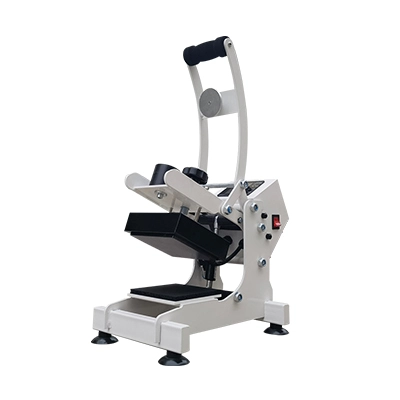
Equipment buyers repeatedly encounter three common stumbling blocks. Guard your capital by preparing for these risks during contract negotiations.
Trading companies and low-tier assemblers rent small warehouses, buy cheap open-market platens, and weld basic steel together. These entities lack internal stress-relieving furnaces, CNC machining centers, and dedicated electrical engineers. If a technical issue emerges, they cannot alter machine dynamics.
Audit the factory's tool list. Confirm they own the precision machinery required to grind platens flat and mill structural frames in-house.
A machine is only as reliable as its cheapest switch. Unscrupulous suppliers cut costs by using generic contactors, unbranded pneumatic cylinders, and cloned temperature controllers.
Insist on a clear Bill of Materials (BOM) within your contract. Specify tier-one global brands:
Pneumatics: SMC, Festo, or Airtac.
Electrical Controls: Schneider Electric, Siemens, or ABB.
Temperature Control: Omron PID controllers or direct PLC thermocouples.
Solid State Relays (SSRs): Celduc or Crydom.
Standardizing on global brands guarantees your maintenance crews can source replacement parts locally without waiting weeks for overseas air freight.
If you pay an OEM to develop custom platen shapes, automated shuttle tracks, or specialized clamping fixtures, protect that investment. Ensure your contract specifies that all custom CAD drawings, PLC source code, and custom casting dies remain your exclusive property.
Without an explicit Non-Disclosure Agreement (NDA) and Intellectual Property clause, an OEM may market your custom production innovations to direct competitors.
Q1: What platen temperature tolerance should I expect from a
high-grade custom industrial heat press?
A1: A properly engineered
industrial platen should maintain a temperature tolerance of ±1°C to ±2°C across
its entire surface. Cheaply made commercial units often suffer variances of ±5°C
to ±10°C, which leads to inconsistent sublimation transfers or bonding
failures.
Q2: When should our factory choose a hydraulic drive over a pneumatic
drive?
A2: Choose pneumatic systems when your process requires fast
cycle times, clean operation (no hydraulic fluid), and total force requirements
below 1 to 2 tons. Switch to hydraulic systems when pressing rigid composites,
high-density rubbers, or large-format materials that demand consistent pressures
exceeding 5 to 10 tons.
Q3: How long does the custom engineering and production cycle take
for an OEM machine?
A3: Standard custom machinery lead times
typically run between 6 and 12 weeks. This includes initial CAD drafting,
mechanical DFM approvals, steel fabrication, platen casting, electrical
assembly, PLC programming, and the mandatory 48-hour FAT run.
Q4: Why is platen thickness critical on large-format heat
presses?
A4: Thick platens (35mm to 50mm) resist mechanical
deflection under continuous tonnage and provide high thermal mass. This thermal
reservoir prevents the platen face from cooling rapidly when loading heavy, cold
substrates, maintaining process repeatability across long shifts.
Q5: Can custom industrial heat press machines integrate directly into
automated factory networks?
A5: Yes. Leading OEMs can integrate
modern industrial heat presses with existing factory supervisory systems. By
utilizing advanced PLCs with Ethernet/IP, Modbus, or Profinet protocols, the
press can export real-time pressure, temperature, cycle time, and error logs
directly to your Manufacturing Execution System (MES).
Sourcing an OEM machine does not have to involve guesswork. By focusing on thermal dynamics, structural frame rigidity, and globally supported electrical parts, you can build a stable, profitable production line. Leading machinery partners like Heat Press Leader work side by side with your operations staff to manufacture custom equipment tailored to your exact manufacturing metrics.
Ready to upgrade your manufacturing floor? Contact our engineering team today to review your production prints, calculate specific pressure requirements, and request a detailed OEM proposal for your next custom industrial heat press installation.