High-volume thermal transfer, substrate lamination, and composite curing demand mechanical reliability and thermal stability that far exceed standard commercial shop equipment. In high-output manufacturing facilities, an industrial thermal press is an essential production node where thermodynamic consistency directly dictates product performance, adhesion strength, and reject rates. Selecting, integrating, and configuring a heat press industrial system requires evaluating structural deflection thresholds, platen thermal uniformity, closed-loop pressure dynamics, and process automation controls.
Modern production facilities run around the clock, meaning equipment must handle high thermal output and heavy mechanical loads without structural fatigue or heat drift. Minute deviations in temperature across an 80-inch platen or subtle pressure drops over continuous eight-hour shifts can lead to delamination, inadequate dye sublimation density, or bond degradation in multi-layer materials. Engineering decisions should be guided by mechanical specifications, thermodynamics, and high-throughput production requirements.
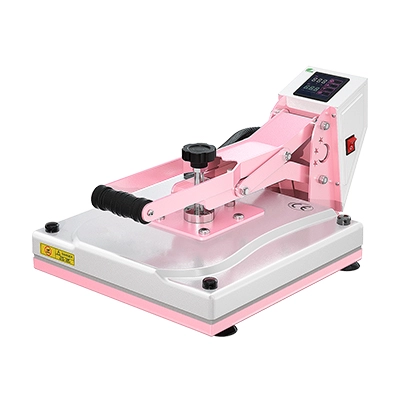
The core of any thermal transfer press lies within its platen assembly. Surface temperature measurements rarely tell the whole story; internal thermal distribution, element layout, and structural alloy compositions ultimately dictate actual process stability.
Conventional heating plates typically use cast-in tubular electric elements. While cost-effective, basic serpentine configurations create pronounced thermal valleys and peaks across large surface areas. High-specification machinery solves this through multi-zone cartridge configurations or drilled-steel platens with circulated synthetic thermal fluid. Thermal oil circulation offers exceptional consistency, maintaining temperature tolerances within ±1°C across large surface areas, which is vital for aerospace prepregs and technical technical textiles.
Platen mass also plays an essential thermodynamic role. Thicker platens act as thermal heat sinks, minimizing temperature drop when cold substrates enter the machine. When ambient substrates enter the pressing zone, a low-mass plate loses heat rapidly, causing duty cycle delays while the heating circuit recovers. Platens cast from precision-milled aluminum tooling plates or high-tensile forged steel balance rapid thermal recovery with reliable structural rigidity under high clamping forces.
Zoned Heating Arrays: Independent outer edge control counteracts ambient radiative heat loss, eliminating perimeter cold zones.
Watt Density Profiling: Higher wattage concentration along perimeter zones maintains edge-to-edge equilibrium.
Direct-Contact RTD Sensors: Resistance Temperature Detectors embedded within fractions of a millimeter from the interface surface yield real-time platen feedback without lag.
Delivering uniform heat is useless if surface pressure varies across the platen interface. Mechanical rigidity under maximum tonnage separates high-performance equipment from standard machinery. Machine frame engineering at Heat Press Leader uses heavy-duty solid steel plate designs optimized through finite element analysis (FEA) to counter structural deflection during continuous high-tonnage cycles.
When high pressure is applied over large surface areas, standard C-frame designs naturally deflect, opening slightly at the front edge. This slight mechanical deflection shifts pressure toward the rear of the machine, creating uneven force distribution that can ruin composite lamination and bond integrity. Industrial operations therefore prioritize four-post hydraulic column structures or tie-rod reinforced frameworks to maintain absolute mechanical parallelism during clamping.
Actuation engineering depends on cycle speed, targeted force, and cleanroom requirements:
Pneumatic Actuation: Ideal for rapid-cycling, lower-tonnage applications such as athletic apparel, performance wear, and small-format dry transfers. Air systems offer swift stroke speeds and clean operation, though they face limits in ultimate clamping tonnage and mechanical stroke control.
Hydraulic Systems: Essential for heavy industrial lamination, technical non-wovens, ballistic materials, and composite consolidating. High-pressure hydraulic circuits with proportional valves provide controlled ramp rates, sustained pressure holds, and tonnages exceeding 50 to 100 tons with micrometer-level mechanical stops.
Servo-Electric Drive Systems: The modern standard for energy-efficient, cleanroom-grade pressing. Servo drives eliminate hydraulic fluid contamination, allow dynamic multi-stage pressure profiling, and deliver repeatable positioning accuracy down to 0.01 mm.
Deploying a heat press industrial installation requires matching platen mechanics to the chemical and physical behaviors of target materials. Processing technical textiles differs significantly from curing solid composite prepregs or transferring thermoset inks onto hydrophobic substrates.
Textile and apparel production relies heavily on moisture vaporization and rapid ink dispersion. When running high-density direct-to-film (DTF) polymers or industrial sublimation on polyester composites, the system must evacuate trapped moisture and vaporized carriers. Platens with integrated vacuum tables or specialized breathable silicone lower pads help draw out moisture and gasses, preventing pinhole voids and surface imperfections.
Bonding automotive interior trim, architectural glass films, or aerospace honeycomb sandwich panels requires extended dwell cycles with precise pressure gradients. In these contexts, excessive initial pressure can crush core components or prematurely squeeze out adhesives before cross-linking completes. Advanced machinery incorporates staged pressure ramps, holding low contact pressure while adhesive viscosity drops, then applying full hydraulic consolidation force precisely at the resin's gel point.
Continuous industrial processing exposes weak points in system design. Unplanned maintenance shutdowns and batch rejections often stem from three common mechanical issues:
Long runs cause ambient factory air, draft exposure, and thermal cycling to alter the outer boundaries of the platen. Standard open-loop control systems fail to detect these subtle environmental shifts. Resolving this requires multi-channel PID controllers that run independent algorithmic loops for core, perimeter, and corner heating sectors, keeping platen temperatures uniform across day-long runs.
Thermal expansion can misalign heavy platens over time. Rigidly locking a steel platen to a cold guide frame induces stress warping and binding along guiding slide pins. Heavy-duty engineering uses precision-machined linear guide bushings with thermal expansion clearances. These setups preserve horizontal platen parallelism while letting materials expand and contract naturally along controlled axes.
Polymers, synthetic resins, and specialty adhesives can vaporize and settle on platen working faces. Baked-on adhesive builds microscopic high spots that cause uneven pressure distribution and product damage. Industrial operations counter this by applying permanently bonded anti-static fluoropolymer platen sleeves, automated roll-to-roll release paper feeds, and quick-change sacrificial lower silicon blankets.
Operating an efficient heat press industrial system requires cutting idle dwell time and protecting workers from high-temperature platens. Dedicated engineering teams integrate loading, cycling, and offloading mechanisms directly into high-speed manufacturing environments.
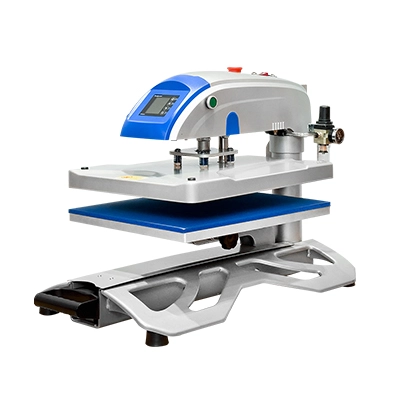
Dual-station shuttle tables increase throughput by letting operators or robotic pick-and-place arms prepare one tray while the second cures under the platen. This keeps the machine running near 100% capacity, eliminating downtime between presses. For continuous roll media, automated indexing unwinds and rewinds feed fabrics, membranes, and adhesives sequentially through the press zone using optical registration marks to eliminate alignment drift.
Control engineers rely on PLC platforms from Siemens, Allen-Bradley, or Mitsubishi to integrate machinery smoothly into broad plant networks. Systems developed by Heat Press Leader incorporate full recipe management systems, storing unique temperature curves, pressure tiers, and dwell durations for hundreds of substrate profiles. In-depth SCADA connectivity allows continuous data logging of every press cycle for complete traceability across safety-critical production lines.
| Mechanical Metric | Pneumatic Actuated Systems | Hydraulic Industrial Systems | Servo-Electric Systems |
|---|---|---|---|
| Clamping Force Range | 0.5 to 8 Metric Tons | 5 to 200+ Metric Tons | 1 to 50 Metric Tons |
| Platen Uniformity | ±2.0°C across platen | ±0.5°C to ±1.0°C (Oil/Zone) | ±0.5°C with multi-zone PID |
| Cycle Speed Capability | Fast stroke (1 - 3 seconds) | Controlled ramp (3 - 10 seconds) | Programmable variable profile |
| Traceability & Logging | Basic open-loop / relay inputs | Integrated PLC with pressure sensors | Continuous load-cell closed loop |
| Target Application | Apparel, transfers, soft goods | Composites, rubber, ballistic sheets | Cleanrooms, electronics, aerospace |
Platen thickness directly determines the heat capacity of the press assembly. Thicker platens (typically between 35 mm and 75 mm) absorb large amounts of heat, preventing sudden temperature drops when cool substrates enter the machine. This stability is essential for high-throughput production lines, as thin platens lose heat on contact and force the system to wait for recovery, slowing down overall output.
Edge-peel problems usually point to temperature drops along platen boundaries or mechanical deflection in the machine frame. Platen edges naturally lose heat through radiation and ambient air convection. Without independent zone control along the perimeter, outside edges run several degrees cooler than the setpoint. Alternatively, a frame that bows under high tonnage will reduce applied pressure along the edges, causing uneven resin flow and incomplete bonding.
The choice between pneumatic and hydraulic systems comes down to required tonnage, substrate sensitivity, and duty cycles. Pneumatic systems work well for high-speed apparel, transfers, and lighter tasks requiring under 8 tons of clamping force. When processing thick industrial composites, rigid technical laminates, or large surfaces that require steady, high-tonnage consolidation (10 to 100+ tons), hydraulic systems deliver the necessary power and stroke control.
A closed-loop setup links continuous sensor feedback directly to heating elements and actuation valves. Instead of using preset timers, the system reads embedded surface RTD sensors and hydraulic load cells constantly. If sensor data shows a temperature drop or hydraulic pressure decay during a press cycle, the PLC adjusts proportional valves and solid-state relays in real time, keeping process conditions stable regardless of external plant variables.
Regular maintenance involves checking platen parallelism with dial indicators, calibrating multi-zone RTD sensors with surface pyrometers, and torque-checking structural tie rods. Technicians should also clean platen surfaces with non-abrasive solvents to remove adhesive buildup, grease tie-rod bushings, inspect hydraulic fluids for particle contamination, and monitor pneumatic seals for line drops that weaken clamping force.
Every industrial production line presents distinct challenges in heat transfer, clamping dynamics, and material behavior. Customizing machinery to precise cycle requirements avoids costly bottlenecks and ensures reliable line integration. The engineering team at Heat Press Leader configures, builds, and supports heavy-duty thermal systems tailored specifically to your manufacturing metrics.
To begin system planning, provide your detailed parameters to our applications group. Helpful details include targeted platen dimensions, operating temperatures, clamping tonnages, substrate characteristics, and planned automation interfaces. Submit your engineering inquiry today to connect directly with our technical design team for detailed mechanical reviews, cycle simulation data, and formal machinery quotations.