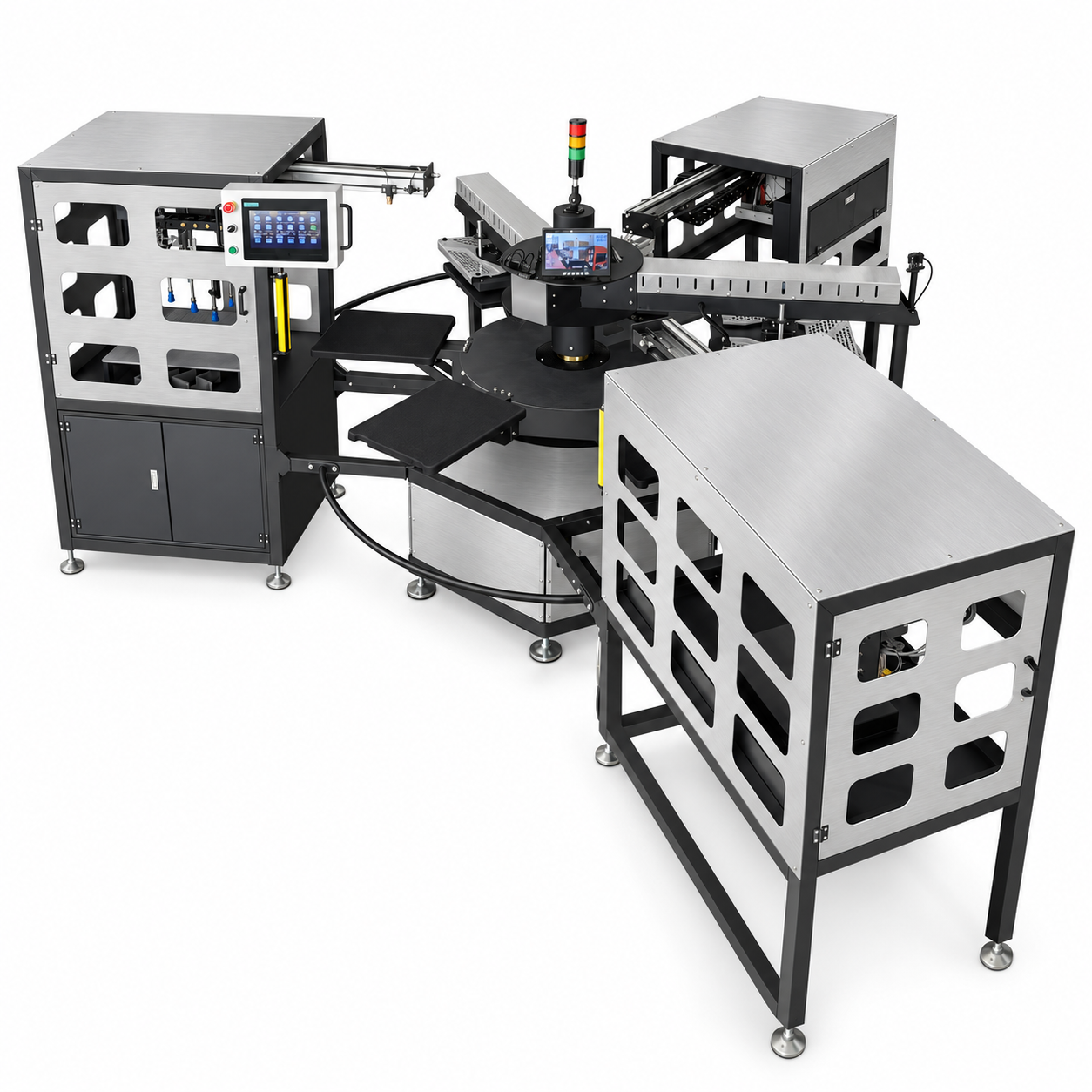
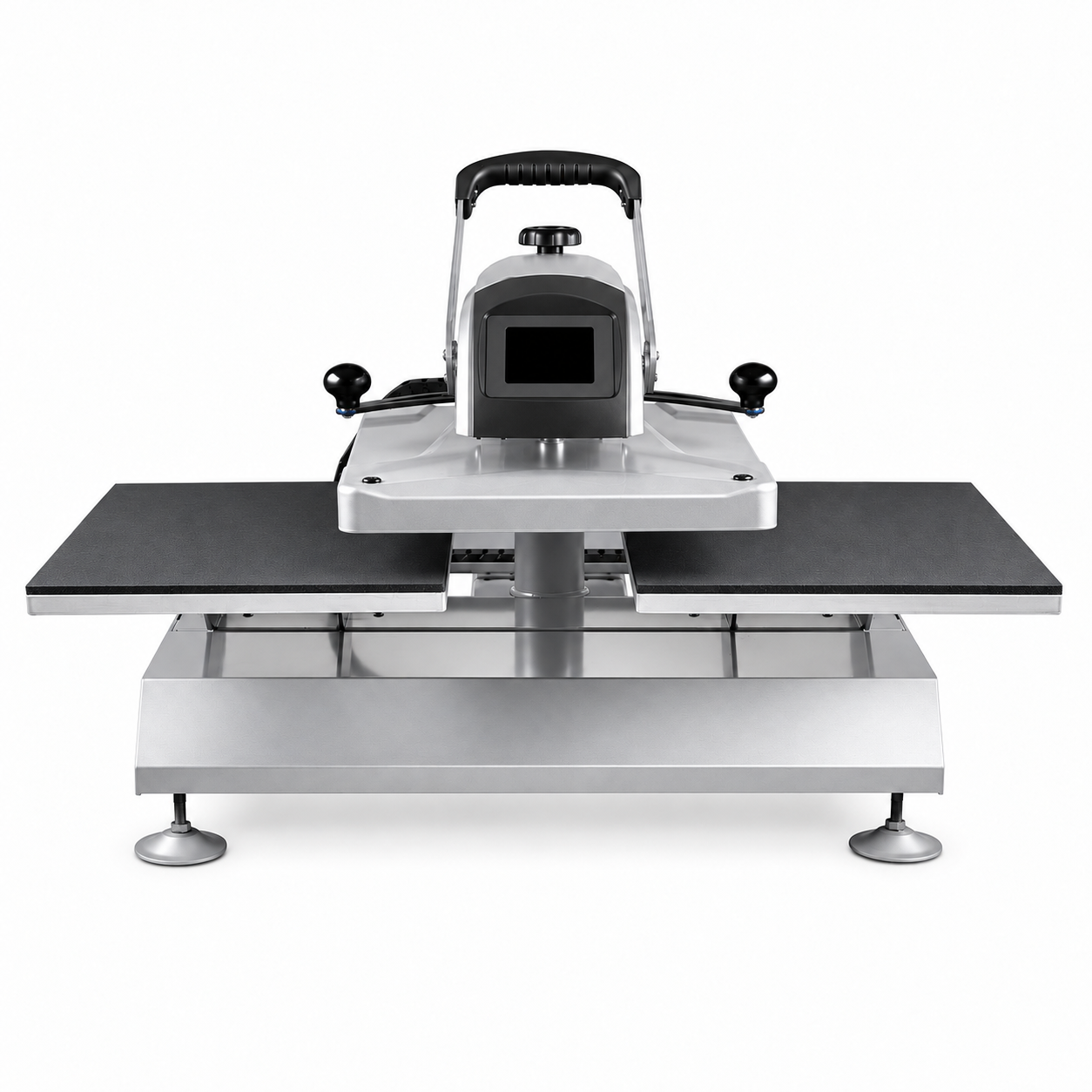
Are you planning to build or expand your brand with a commercial heat transfer line? Sourcing reliable manufacturing partners can determine your margins and market reputation. At Heat Press Leader, we help private label brands, equipment distributors, and industrial print suppliers design, prototype, and mass-produce market-ready machinery.
Send our engineering team an inquiry today to discuss your target specifications, target unit pricing, and custom design needs.
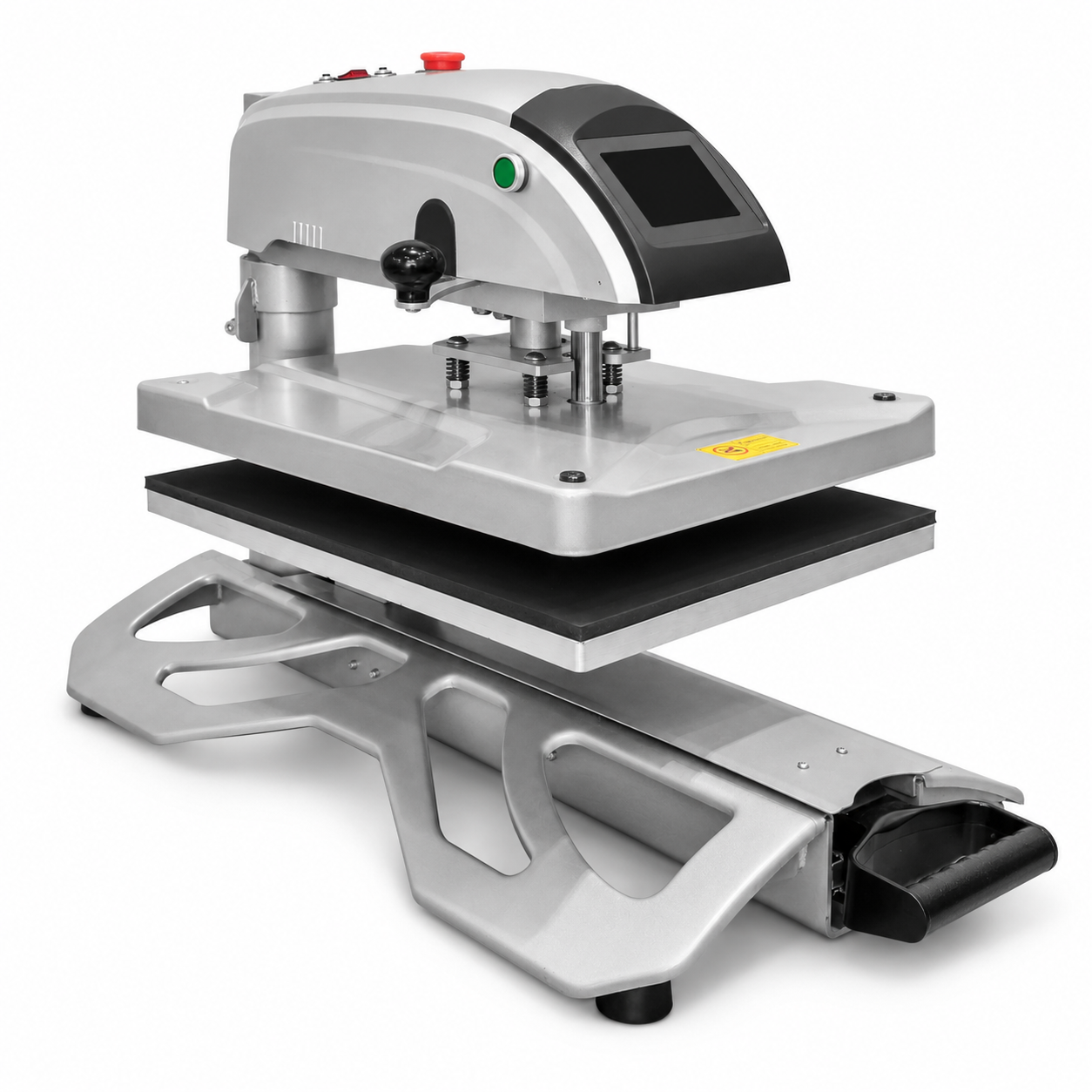
The 16x20-inch (40x50 cm) platen remains the industry benchmark for garment decorators worldwide. It accommodates oversized street wear, full-back hoodie transfers, athletic team jerseys, and tote bags without requiring double presses.
Smaller platens limit client offerings. Larger platens consume excessive shop space and power. The 16x20 heat press hits the functional sweet spot, making it the highest-volume production unit in modern apparel print shops.
Reselling standard, generic models on platforms like Amazon or local marketplaces leads to margin compression. Top print equipment brands now bypass basic wholesale distribution.
They choose Original Equipment Manufacturing (OEM) or Original Design Manufacturing (ODM) to secure proprietary hardware features, patented hinge geometry, and branded software interfaces. Custom machinery commands higher pricing and builds lasting brand loyalty.
Commercial users require repeatability. Modern print shops rely on integrated touchscreen displays with multi-recipe presets that allow operators to store time, temperature, and pressure parameters for diverse heat transfer vinyl (HTV), direct-to-film (DTF), and screen-printed transfers.
Industrial units increasingly feature IoT modules for usage tracking, preventative maintenance alerts, and remote technician diagnostics.
Operator fatigue lowers shop output and causes inconsistent applications. Modern buyers demand electromagnetic auto-open mechanisms or heavy-duty pneumatic systems.
Threadable C-frame bases and smooth pull-out lower platens protect workers from accidental burns and streamline garment placement. Sourcing models with smooth drawer slides gives your brand a direct competitive edge.
Energy costs directly influence equipment purchase decisions in European and North American markets. Modern machinery utilizes fast-recovery heating elements and multi-layer thermal insulation blankets behind the upper platen.
These components reduce idling wattage by up to 30%, satisfying strict energy regulations without sacrificing heat-up speed.
OEM production relies on existing, factory-tested structural frames. The factory applies your external color scheme, badges, customized silicone pads, branded packaging, and modified firmware.
Lower upfront investment: Eliminates high tooling and stamping die expenses.
Faster time-to-market: Prototypes wrap up in 3 to 4 weeks.
Predictable reliability: Uses chassis and linkage designs that are already field-tested.
ODM projects require collaborative industrial design from the ground up. You develop new structural linkages, patented base profiles, proprietary dual-shuttle platens, or customized digital user interfaces.
While ODM involves significant tooling fees and longer development cycles, it builds defensive barriers around your brand, preventing competitors from duplicating your machines.
Cold spots cause transfer peeling and ruined stock. Insist on cast-in tubular heating elements cast directly into high-density aluminum alloy. Budget wire-wound elements glued to platen surfaces degrade quickly under commercial workloads.
Require your manufacturer to space heating loops no more than 1.5 inches apart to guarantee consistent platen edge temperatures.
Uniform pressure requires structural mass. Look for laser-cut, high-tensile carbon steel frames rather than bolted sheet-metal structures.
Over-the-center pressure links apply force evenly across the entire 16x20 surface. Edge-locking designs flex over time, producing faint prints along the front boundary of the transfer.
High-volume shops need thick platens that maintain heat during back-to-back pressing cycles. Avoid platens thinner than 0.75 inches (19 mm); commercial configurations demand at least 0.85 to 1.0 inch thickness.
Surfaces should feature multi-layer non-stick PTFE coatings bonded at high temperatures rather than loosely wrapped Teflon sheets.
Do not import non-compliant electrical machinery. Commercial equipment imports face strict safety requirements:
North American distribution requires compliance with UL Standards for electrical safety.
European Union operations mandate CE marking, Low Voltage Directives (LVD), and Electromagnetic Compatibility (EMC) testing.
Environmental standards must satisfy RoHS Directives to restrict hazardous substances.
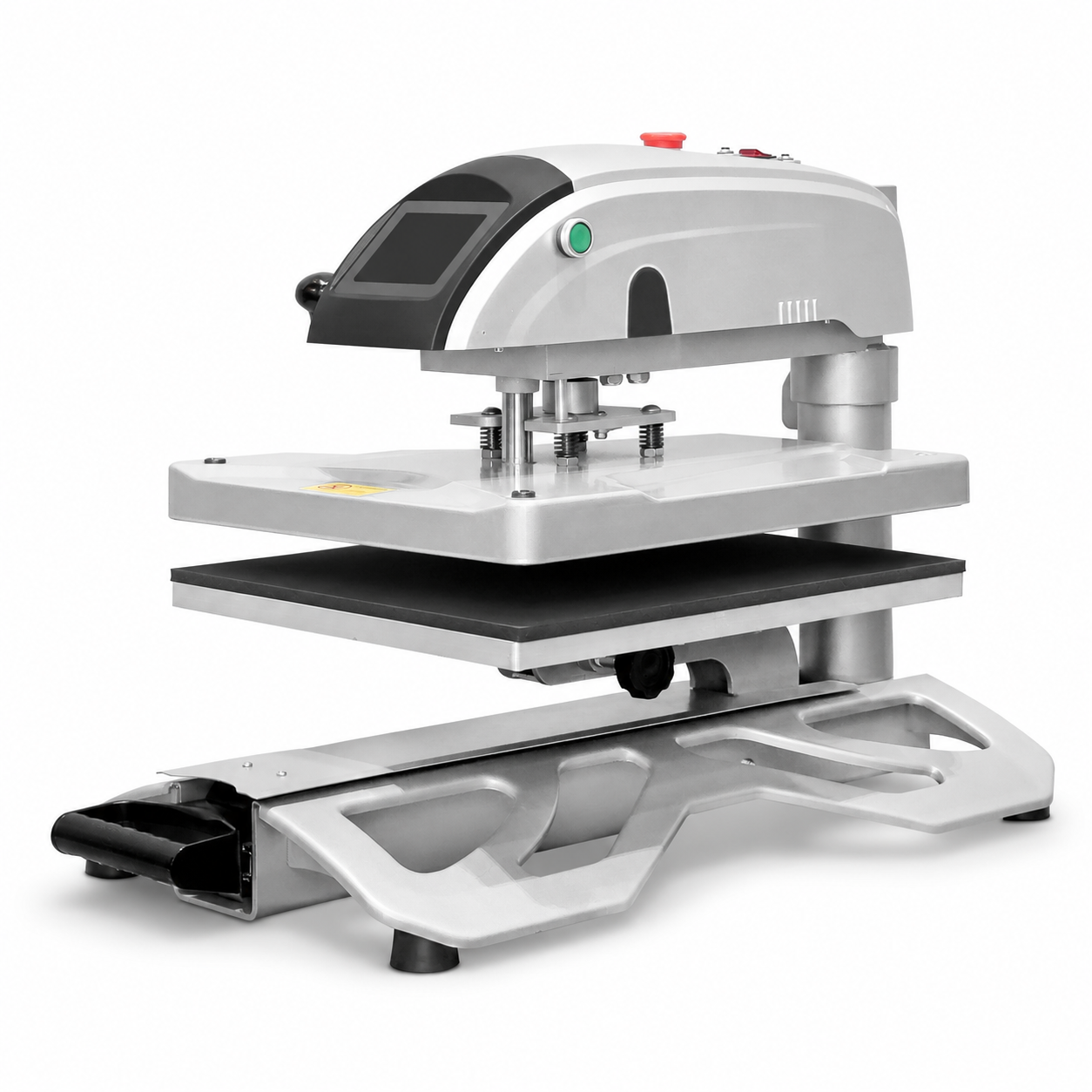
Trading houses add middleman markups and distort technical communication. Filter prospective partners by demanding real-time video factory audits.
Verify that your candidate owns in-house metal fabrication tools, laser cutters, robotic welders, and automated electrostatic powder coating lines. Specialized factories, like the Heat Press Leader production floors, operate dedicated platen assembly stations and aging racks.
Vague inquiries lead to generic replies. Build an engineering-driven RFQ document specifying:
Platen dimensions (16x20 inches / 40x50 cm).
Wattage and voltage options (110V/15A, 120V/20A, or 220V-240V).
Target pressure output (manual clamping force or pneumatic PSI targets).
Preferred display module type (LCD, OLED, or membrane button array).
Customization details (embossed castings, custom packaging, branded base colors).
Before commissioning production batches, order a working engineering sample. Test it with an infrared thermal camera. Heat the platen to 380°F (193°C) and check for hot or cold areas.
A high-performance platen shows no more than a ±5°F variance from center to edge.
Work with partners maintaining accredited quality standards verified through ISO 9001 certifications. Review their incoming material inspection routines for aluminum casting purity, silicone pad density, and digital thermal controller accuracy.
Raw materials dictate over 60% of baseline manufacturing costs. Aluminum costs fluctuate, impacting platen base pricing. Heavy steel frames add to base expenses, but they prevent frame twisting over time.
Do not simply choose the lowest bid. Inexpensive machines cut corners with cheap relay switches, thin wiring harnesses, and low-grade heating elements that fail prematurely in the field.
MOQs reflect the degree of customization you require:
Basic OEM branding (custom colorway, logo plates, master cartons): 20 to 50 units.
Firmware and interface customizations: 50 to 100 units.
Custom casting tooling and ODM frames: 200 to 500+ units to justify mold investments.
A commercial 16x20 heat press weighs between 80 and 140 pounds (36 to 64 kg). Ordinary cardboard cartons collapse under this weight during shipping.
Require custom high-density honeycomb packaging or form-fitting drop-tested EPE foam inserts. Run drop tests from a 3-foot height to verify that delicate thermal controls and linkages remain undamaged before releasing shipments.
Never approve final supplier wire transfers until your third-party QA inspector verifies these technical inspection points:
48-Hour Continuous Burn-in Testing: Keep every machine running at 400°F (204°C) across continuous shifts to confirm control boards do not overheat or short out.
Thermocouple Contact Testing: Measure platen surface temperatures using direct contact digital probes to calibrate control board readouts against real-world metrics.
Pneumatic and Welded Stress Testing: Run pneumatic cylinders through 2,000 continuous open-close cycles under 80 PSI to detect pressure leaks or frame warping.
Dielectric Voltage Withstand Test: Confirm high-voltage insulation holds safely, guarding end users against unexpected shocks.
Q1: What is the standard production lead time for an OEM 16x20 heat
press order?
A1: Standard production schedules run 30 to 45 business
days for repeat runs. First-run production runs requiring custom tooling,
modified firmware, and unique color finishes typically require 60 to 75 days,
including sample approvals.
Q2: Can a 16x20 machine operate safely on standard domestic wall
outlets?
A2: A commercial 16x20 platen requires 1,800 to 2,200 watts
to maintain stable production temperatures. In North America (110V-120V), this
demands a dedicated 15A to 20A circuit. For commercial shops, offering a 220V
alternative provides faster recovery times and balances the electrical draw.
Q3: Which mechanism performs better: auto-open clamshell or
swing-away?
A3: Auto-open clamshell models maximize speed and
preserve floor space, making them ideal for high-volume T-shirt production runs.
Swing-away designs clear the work zone completely and provide vertical pressure,
which works better for thick items like mouse pads, signs, and outerwear.
Q4: Why does a cast-in heating element matter on a 16x20 transfer
press?
A4: Cast-in elements embed the tubular heating loop directly
into molten aluminum. This creates a solid block that eliminates internal air
gaps, distributes heat evenly across the whole platen, and prevents premature
element burnout caused by uneven thermal resistance.
Q5: How do factory partners verify pressure distribution across the
platen?
A5: Technicians run four-corner pressure balance tests using
pressure-sensitive film or multi-point balance scale arrays across the 16x20
surface. If the center and corners show pressure variances over 15%, the central
structural hinge requires realigning.
Launching a reliable transfer machinery line requires proven engineering experience, careful quality control, and scalable factory production. Partnering with a dedicated manufacturer protects your brand reputation and bottom-line margins.
The engineering team at Heat Press Leader provides complete OEM and ODM design support, fast prototyping, and reliable mass manufacturing. Contact our B2B account team today to request a comprehensive production quote, discuss design specs, or schedule a virtual factory inspection.