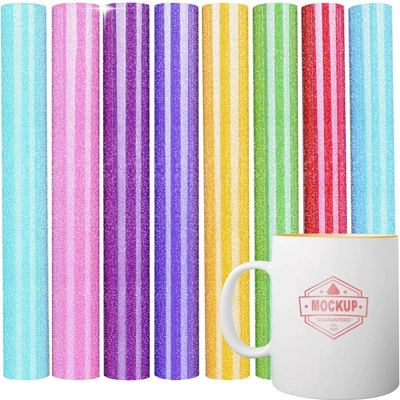
Commercial textile embellishment demands exact mechanical repeatability, precise thermodynamic stability, and robust platen geometry. High-volume apparel decorators, uniform manufacturers, and promotional item producers rely on thermal transfer films to deliver durable, vibrant graphics on varied substrates. Achieving high wash-fastness and zero-defect output requires an understanding of how heat transfer vinyl interfaces with polymer textiles under heat and pressure. Selecting an industrial-grade vinyl heat press machine requires moving beyond entry-level marketing claims and examining structural mechanics, thermal distribution physics, and pneumatic actuation systems.

Applying heat transfer vinyl (HTV) involves activating a thermoplastic polyurethane (TPU) or copolyester hot-melt adhesive layer, driving it into the interstitial spaces of the textile weave. This mechanical interlock relies on three precisely controlled parameters: platen temperature, dwell time, and applied downward force.
When the temperature falls outside the adhesive's activation window by as little as 3°C, the chemical bonding remains incomplete. This leads to edge delamination during industrial laundering. Conversely, excessive heat causes adhesive strike-through, where the molten bonding agent migrates entirely through the textile fibers, starving the interface and leaving brittle surface films prone to cracking. Heat transfer substrates such as low-melt films designed for non-woven polypropylene or elastomeric athletic textiles require narrow thermal tolerances that inexpensive hobby units cannot deliver.
Dwell time controls the heat flux across the carrier sheet, film membrane, adhesive foundation, and textile substrate. Because textiles differ in specific heat capacity and moisture retention, the operational dwell must account for conductive heat loss. Heavy cotton fleece draws heat away from the platen interface at a higher rate than polyester interlock, requiring either an extended dwell cycle or a compensated thermal baseline.
Pressure serves as the vehicle for physical displacement. The molten adhesive must displace trapped air within the yarn bundles to achieve total wetting of the fibers. Industrial operations monitor pressure in specific pounds per square inch (PSI) or bar rather than subjective manual resistance. Uniform distribution of this force prevents localized wash-off and structural distortion of heat-sensitive synthetic fibers.
Heat press configurations fundamentally influence shop ergonomics, production velocity, and pressure distribution. Industrial production plants select machinery based on their dominant substrate profiles and platen clearance requirements.
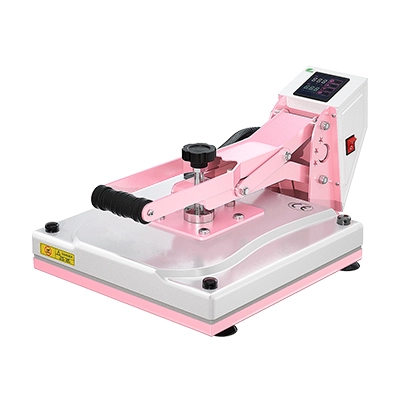
Clamshell designs use a rear single-pivot hinge mechanism. The upper heating platen descends on an arc toward the stationary lower platen.
Footprint Efficiency: The vertical mechanical path occupies minimal workbench space, making it suitable for modular production lines and mobile fulfillment setups.
Kinematic Pinch Effect: As the platen closes along an arc, the rear edge contacts the substrate fractions of a second before the front edge. On materials thicker than 6 millimeters, this angular approach creates uneven pressure vectors and potential substrate slippage.
Operator Ergonomics: Repetitive overhead pulling creates shoulder fatigue in high-volume settings, though pneumatic assist cylinders and auto-open magnetic latches help mitigate physical strain.
Swing-away designs mount the heating platen on a vertical structural column, permitting the heated element to rotate horizontally 90 to 180 degrees away from the loading zone.
Direct Vertical Compression: The upper platen moves straight down on a perpendicular plane to the lower table. This parallel descent applies uniform, zero-shear mechanical pressure across thin apparel and thick outerwear alike.
Clear Workspace: Moving the heating element completely out of the operator's working field creates a heat-free loading zone. This enhances placement accuracy, facilitates laser-alignment systems, and reduces the likelihood of accidental burn injuries.
Spatial Constraints: Swinger platforms require a wider operational footprint to accommodate the horizontal sweep radius of the upper platen assembly.
Drawer units feature a pull-out lower platen, combining the footprint economy of a vertical press with the ergonomic access of a swing-away system. Shuttle units advance this concept by utilizing dual lower tables on a sliding rail axis. While the heating platen engages one station, the operator loads and pre-aligns the second platen. This configuration optimizes dwell cycles and yields high parts-per-hour output in continuous assembly environments.
The core component of any commercial vinyl heat press machine is the heating platen. Structural integrity and metallurgic purity determine whether the press maintains uniform temperature across its entire surface or exhibits cold spots that compromise film adhesion.
Industrial platens use thick cast-aluminum alloys, typically ASTM A356 or equivalent, ranging from 19mm to 32mm in thickness. Cast aluminum provides balanced structural rigidity and high thermal conductivity. Thicker platens act as thermal reservoirs, absorbing minimal temperature drops when a cold, damp garment is introduced to the pressing bed. This thermal mass eliminates cycle-to-cycle recovery delays, sustaining continuous line operations.
Within the cast platen, internal tubular heating elements are embedded in a dedicated serpentine or dual-loop pattern. The spatial distance between element passes directly correlates to thermal gradient variations:
Tubular Element Casting: Premium manufacturing casts the heating elements directly into the molten aluminum matrix. This creates uninterrupted molecular contact, maximizing conductive heat transfer and eliminating internal air pockets that cause localized element burnout.
Edge Loss Compensation: Perimeter radiation causes the outer boundaries of a platen to lose heat faster than the core. Engineering platen dies with tighter loop spacing along the outer edges maintains thermal equilibrium across the operational perimeter.
PID Logic vs. Bimetal Thermostats: Standard bimetal switches exhibit wide thermal deadbands, fluctuating by as much as 15°C. Industrial systems use RTD sensors paired with Proportional-Integral-Derivative (PID) solid-state relays (SSR). PID algorithms pulse the heating circuits continuously, sustaining platen temperatures within a tight 1°C variance.
Manufacturers like Heat Press Leader engineer platens with structural ribbing on the upper casting surface. These cast-in gussets prevent thermal warpage and torsional deflection under high clamping pressures, preserving mechanical parallelism across thousands of operational cycles.
Applying high compressive force exposes the machinery frame to mechanical deflection. Under 5 to 8 bar of mechanical loading, low-grade steel frames experience structural flex. When the structural arms flex, platen parallelism drops, producing high pressure at the perimeter and negligible pressure in the center. Industrial equipment counters this mechanical failure mode using laser-cut structural steel tubing and reinforced C-frame geometry.
Actuation mechanisms dictate consistency across multiple shifts:
Manual Over-Center Toggle Clamps: These rely on human input to force mechanical links past an on-axis center point into a locked position. While cost-effective, applied pressure fluctuates based on operator strength, arm reach, and shift fatigue.
Magnetic Auto-Open: An integrated electromagnet secures the mechanical linkage during dwell, while a digital controller releases it automatically when the timer reaches zero. This eliminates human timing errors and prevents heat-press scorch marks.
Pneumatic Piston Drive: Heavy industrial lines utilize pneumatic air cylinders driven by plant compressed air. Air actuation provides repeatable, calibrated pressure that adjusts via an analog regulator or digital interface. The linear stroke of a pneumatic cylinder guarantees perpendicular platen closure, maintaining absolute parallelism regardless of material thickness.
Commercial operations depend on high asset utilization and minimal changeover down-time. A static 40x50cm lower platen struggles when processing smaller specialized items like youth apparel, pocket configurations, pant legs, or luggage bags. Clamping a large flat surface over bulky seams, zippers, and thick hems directs all load onto the seam ridges, leaving the graphic transfer area uncompressed.
Modern production facilities utilize quick-change, interchangeable lower platen sets. Rapid-release mechanical mechanisms enable technicians to change platens in seconds without tools. Drop-in platens support targeted isolation:
Sleeve and Leg Platens: Narrow longitudinal profiles permit the sliding of tubular garments without stretching adjacent seams.
Shoe and Hat Platens: Specialized contoured bases allow precise film application over curved geometries and reinforced toe sections.
Membrane Air Platens: Pneumatically inflated lower bladders contour around thick buttons, heavy canvas seams, and uneven surfaces, equalizing compressive resistance across complex three-dimensional items.
Equipment engineered by Heat Press Leader integrates quick-coupling mechanical mounts with laser guidance systems. Dual adjustable projection beams delineate precise graphic coordinates directly onto the substrate, lowering alignment cycle times and cutting production scrap rates.
Systematic defect analysis identifies mechanical bottlenecks and equipment failures across active manufacturing operations.
When HTV transfers peel away at the outer edges during domestic or commercial wash tests, the underlying fault typically points to perimeter temperature degradation or platen deflection. Checking platen diagnostics with a calibrated surface pyrometer reveals whether edge heating compensation remains active. If thermal profiles appear uniform, inspect structural platen parallelism with digital micrometer gauges placed at the four corners of the bed.
If polyurethane film finishes show adhesive squeeze-out along graphic perimeters, or if the film's top surface reveals underlying textile textures, excessive pressure or temperature is the root cause. When operating with specialized elastic transfers, calibrate the pneumatic regulator down to between 2 and 3 bar. Alternatively, cross-verify digital temperature displays against physical thermocouple readings to correct for degraded thermal sensors.
Substrate scorching or dye sublimation migration occurs when high thermal dwell times release moisture or activate dispersible dyes in synthetic fabric blends. Lowering temperature setpoints and migrating to engineered low-melt adhesives protects thermal-sensitive fibers from permanent heat press glaze marks.
What is the ideal platen thickness for continuous commercial
production?
A cast-aluminum platen should measure at least 19mm to
25mm thick. Thicker platens preserve thermal equilibrium when interacting with
ambient textiles, preventing the temperature fluctuations common in thin,
stamped platens during high-volume operations.
How does pneumatic actuation compare to manual over-center toggle
presses?
Manual toggles rely on physical strength, creating pressure
variations across shifts and causing operator fatigue. Pneumatics provide
continuous, calibrated pressure via regulated compressed air, ensuring
consistent mechanical force and identical film adhesion on every run.
Why are PID digital controllers preferred over standard analog
thermostats?
Standard analog thermostats rely on mechanical bi-metal
strips that require wide temperature swings before switching elements on or off.
PID microprocessors compute temperature trends in real time and pulse SSR units
continuously, holding thermal variance to within ±1°C.
How often should surface thermal distribution be calibrated on an
industrial press?
Operational standards call for platen surface
auditing every 250 operating hours or once a month. Use a high-accuracy,
calibrated multi-point contact surface probe rather than non-contact infrared
thermometers, which introduce emissivity errors on polished or coated
platens.
What electrical service supply is optimal for high-capacity
industrial machines?
While compact desktop units run on standard
110V/120V circuits, commercial production systems benefit from 220V/240V
single-phase or three-phase power. Higher voltage lowers the operating amperage
draw, accelerates initial warmup, and supports rapid element heat recovery
between pressing cycles.
Operating a zero-defect textile printing line requires machinery engineered for strict mechanical stability, uniform thermal output, and sustained industrial throughput. Standard, off-the-shelf consumer presses cannot deliver the structural rigidity, thermal accuracy, and repeatable pneumatic load required for large-scale garment manufacturing.
Heat Press Leader engineers and manufactures specialized industrial heat press platforms, pneumatic systems, and modular automated platen systems tailored to custom production environments. Facility engineers, production managers, and commercial procurement teams are invited to submit technical specifications, project requirements, and facility parameters to our applications group. Contact our engineering department today to request an engineering consultation, detailed CAD drawings, and volume equipment quotes.