Entering the garment decoration and industrial transfer sector requires an appreciation of thermal dynamics, mechanical leverage, and polymer curing chemistry. Selecting the appropriate heat press for beginners requires looking past superficial marketing claims and evaluating core engineering specifications. A thermal press is not simply a heated clamping device; it is a precision instrument designed to deliver repeatable temperature, uniform mechanical pressure, and precise dwell times across varied substrates.
For operations launching a localized print facility, athletic wear production line, or promotional goods workshop, initial equipment choices dictate product rejection rates and profit margins. Understanding platen construction, frame deflection resistance, and thermal regulation separates profitable production runs from costly manufacturing setbacks.
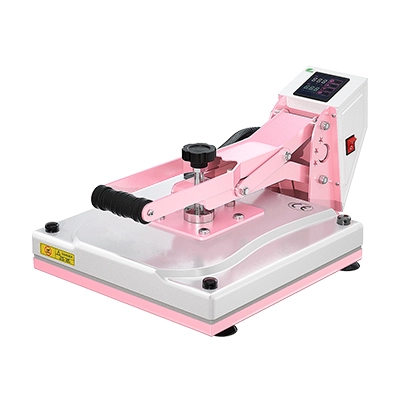
The heating platen represents the core component of any thermal press system. Low-grade units rely on thin stamped aluminum sheets equipped with sparse, serpentine heating elements. These budget assemblies present severe thermal gradients, frequently exhibiting variances of 15°C to 25°C between the center and the perimeter. Such temperature deltas lead to incomplete adhesive activation in Direct-to-Film (DTF) operations or inconsistent dye sublimation density.
Industrial entry systems feature thick-cast aluminum platens, typically ranging from 19mm (0.75 inches) to 25.4mm (1.0 inch) in thickness. Cast aluminum alloys, such as A356, offer elevated thermal conductivity and substantial heat retention. When cooler substrates enter the pressing zone, high-mass platens resist instantaneous thermal drop, preserving calibrated dwell parameters.
Heating element topology within the platen defines edge-to-edge uniformity. High-performance units integrate continuous tubular heating elements cast directly into the aluminum matrix. These elements are routed in dense, parallel configurations to ensure thermal stability across the entire working envelope. Machine manufacturers like Heat Press Leader engineer platens to maintain surface tolerances within ±2°C, preventing under-cured margins and adhesive failure on oversized transfers.
Temperature control circuits must use digital microprocessors coupled with Type K thermocouples or platinum RTD sensors. Solid-state relays (SSRs) are preferred over mechanical contactors, switching electrical current rapidly to eliminate temperature overshoot and deliver flat-line thermal stability throughout intensive multi-shift operations.
Mechanical configurations define operator ergonomics, production velocity, and substrate adaptability. Selecting an industrial heat press for beginners involves analyzing the kinematics of clamshell, swing-away, and drawer architectures.
Clamshell Systems: Operating on a central rear pivot, clamshell presses feature a compact footprint suitable for facilities with spatial constraints. Modern clamshell units feature elevated rear hinge points or floating upper platens that drop parallel to the lower platen prior to final lock-down. This mechanism minimizes substrate migration and "pinch effect" common to entry-level scissors linkages.
Swing-Away (Swinger) Systems: The upper heated assembly lifts vertically and pivots 90 to 180 degrees horizontally away from the lower bed. This configuration yields an entirely unobstructed workspace, permitting precise substrate alignment while removing the operator's hands from direct thermal radiation. Swing-away configurations excel when processing thick substrates, such as ceramic tiles, wooden plaques, or heavy outerwear, because the force vector applies strictly perpendicular to the work surface.
Drawer (Pull-Out Bed) Systems: Integrating clamshell actuation with an extendable lower carriage, drawer systems prevent radiant heat exposure while preserving a compact machine perimeter. Lower platen stability remains governed by machined linear guide rails rather than pressed sheet-metal tracks, preventing lateral deflection under load.
Surface pressure constitutes the most misunderstood parameter in thermal transfer processing. The force applied to an adhesive bond must be uniform across every square centimeter of the platen interface. When an operator secures a central mechanical toggle clamp, the structural frame experiences severe tensile and bending stresses.
Entry-level chassis built from light-gauge stamped sheet steel inevitably bow under high mechanical loads. Frame deflection causes the center of the platen to deliver lower effective pressure than the outer edges, resulting in wash-fastness degradation along the center line of finished garments. Commercial-grade frameworks utilize laser-cut structural tubular steel or heavy cast iron bodies to resist mechanical deflection under continuous high-pressure clamping.
Calculating the actual force delivered to a substrate requires distinguishing between applied line force and surface pressure:
Actual Pressure (P) = Total Applied Force (F) / Contact Area (A)
When transitioning to larger transfer footprints, an entry-level manual press may fail to supply the required force (typically 2.8 to 4.2 bar / 40 to 60 PSI for commercial screen printed plastisol transfers). When evaluating a heat press for beginners within a commercial setup, review whether manual over-center linkages supply adequate mechanical advantage without imposing operator fatigue, or if pneumatic assist actuation is warranted for uniform cycle repetition.
New commercial decorators must handle diverse materials and transfer technologies. Sourcing versatile machinery avoids the immediate requirement for secondary hardware investments.
Direct-to-Film (DTF): Demands extremely flat platens and exact low-temperature control (typically 140°C to 155°C) to melt polyurethane hot-melt powders without scorching synthetic fabrics.
Screen Printed Plastisol Transfers: Requires high thermal mass and firm, consistent pressure (above 3.5 bar) to push the semi-cured plastisol emulsion deep into textile weaves.
Dye Sublimation: Demands high temperatures (190°C to 205°C), long dwell periods (45 to 60 seconds), and precise vacuum or mechanical contact to ensure clean molecular bonding with polyester polymers.
Embroidered & Silicone Emblems: Requires variable vertical clearance to avoid crushing three-dimensional physical textures while bonding thermoset adhesives.
The lower platen requires resilient padding to absorb substrate irregularities such as seams, zippers, and collars. Industrial applications utilize high-density, closed-cell silicone foam or solid cast silicone rubber pads rated for continuous temperatures up to 260°C. Low-density sponge pads degrade rapidly, taking permanent compression sets that cause pressure loss across operational zones.
Direct exposure to bare upper platens can cause ink burn-off and resin accumulation. Premium manufacturers, including Heat Press Leader, coat upper platens directly with non-stick fluoropolymer (PTFE) solutions via electrostatic spray and thermal curing cycles. This industrial coating minimizes mechanical friction during placement, sheds adhesive run-off, and eliminates the daily requirement for loose, disposable protective covers that introduce thermal insulative barriers.
Retaining consistent product output over several years requires systematic equipment maintenance. Precision machinery incorporates accessible service points for pivot bushings, thrust bearings, and electrical harnesses.
Periodic thermal verification ensures the platen matches digital display readings. Calibrated digital pyrometers paired with surface contact probes should be deployed across a nine-point grid on the platen surface every three months. Adjustments are handled via the PID controller's offset programming. Mechanical pivots should be treated with high-temperature synthetic grease to prevent eccentric wear along the drive linkages, which can skew the platen interface out of parallel alignment.
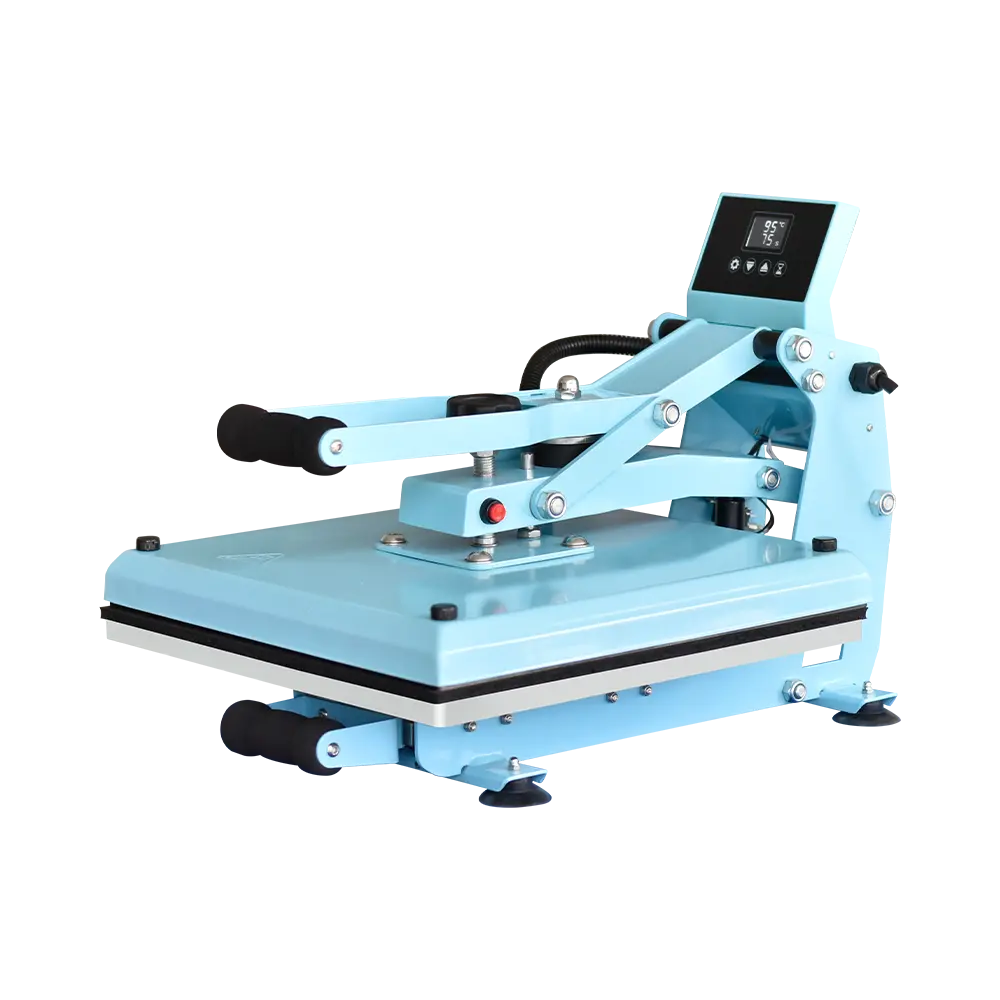
When selecting a heat press for beginners to drive initial enterprise revenue, buyers must look beyond the initial purchase price to consider the total cost of ownership. Unscheduled machine downtime, ruined substrate garments, and high scrap rates rapidly outstrip any savings realized on light-duty machinery.
Key procurement criteria to evaluate before ordering include:
Total structural weight: Substantial weight typically indicates solid platen casting and thick steel frame construction.
Quick-change lower platen compatibility: Essential for switching swiftly to shoe, sleeve, or youth-sized platens.
Electrical compliance: Verification of CE, UL, or CSA safety and electrical certifications for regional commercial wiring.
Platen parallel calibration mechanisms: Micro-adjustment screws to dial out mechanical misalignment over time.
For organizations establishing scalable operations, engineering support from Heat Press Leader provides custom lower platen geometries, automated pneumatic conversions, and specialized heating profiles tailored to specific industrial workflows.
Hobby machines utilize stamped, thin heating plates with embedded wire coils that present severe thermal inconsistencies and flex under mechanical load. Commercial entry systems rely on thick cast-aluminum platens, rigid structural frames, accurate PID temperature control, and serviceable components engineered to withstand high cycle frequencies without losing platen parallelity.
The internal thermocouple reads temperature deep inside the aluminum casting or adjacent to the heating element, rather than at the platen face. Environmental factors, ambient drafts, and interface wear can create a discrepancy between the internal sensor and the external contact surface. Commercial units feature digital calibration offsets to reconcile surface pyrometer readings with the machine display.
Standard clamshell units close at an angle, which can concentrate excessive force on the rear edge of thick items and cause uneven pressing or substrate breakage. For rigid materials thicker than 6mm (0.25 inches), a swing-away or specialized parallel-lift clamshell press is recommended to ensure direct vertical force distribution.
A platen under 15mm thick loses thermal energy quickly when cool garments are placed against it, requiring dwell-time delays between pressing cycles to recover set temperatures. Platens measuring 19mm to 25mm possess the thermal capacity to maintain operational temperatures continuously, enabling sustained, high-speed production sequences.
Pneumatic systems provide exact, button-activated pressure regulation and eliminate physical operator fatigue, making them ideal for high-volume settings. However, heavy-duty manual machines equipped with compound over-center linkages can deliver sufficient mechanical pressure for moderate commercial volumes, keeping capital entry costs lower.
Configuring a productive printing facility demands machinery engineered to exact industrial standards. Inquire with our engineering sales division to review detailed machine schematics, request custom platen dimensions, or obtain a comprehensive commercial supply quotation tailored to your production pipeline.