Side hustles and custom apparel businesses are booming as we head into 2026. Creative entrepreneurs, home crafters, and boutique apparel decorators are actively hunting for their first commercial machine. While end-users spend hours searching online for the best starter heat press to launch their print shops, brands and wholesale distributors face a much bigger challenge behind the scenes.
B2B importers need a dependable manufacturing partner capable of designing, building, and scaling an entry-level unit that does not cut corners on performance. A poorly built entry unit kills customer trust overnight. As an industry pioneer founded in 2002, Heat Press Leader (XinHong Group Limited) breaks down the engineering standards your brand needs to deliver an exceptional starter machine to the global market.
If you plan to launch or upgrade an entry-level thermal press line this year, submit your project inquiry to our engineering team today to review custom production options and sample lead times.
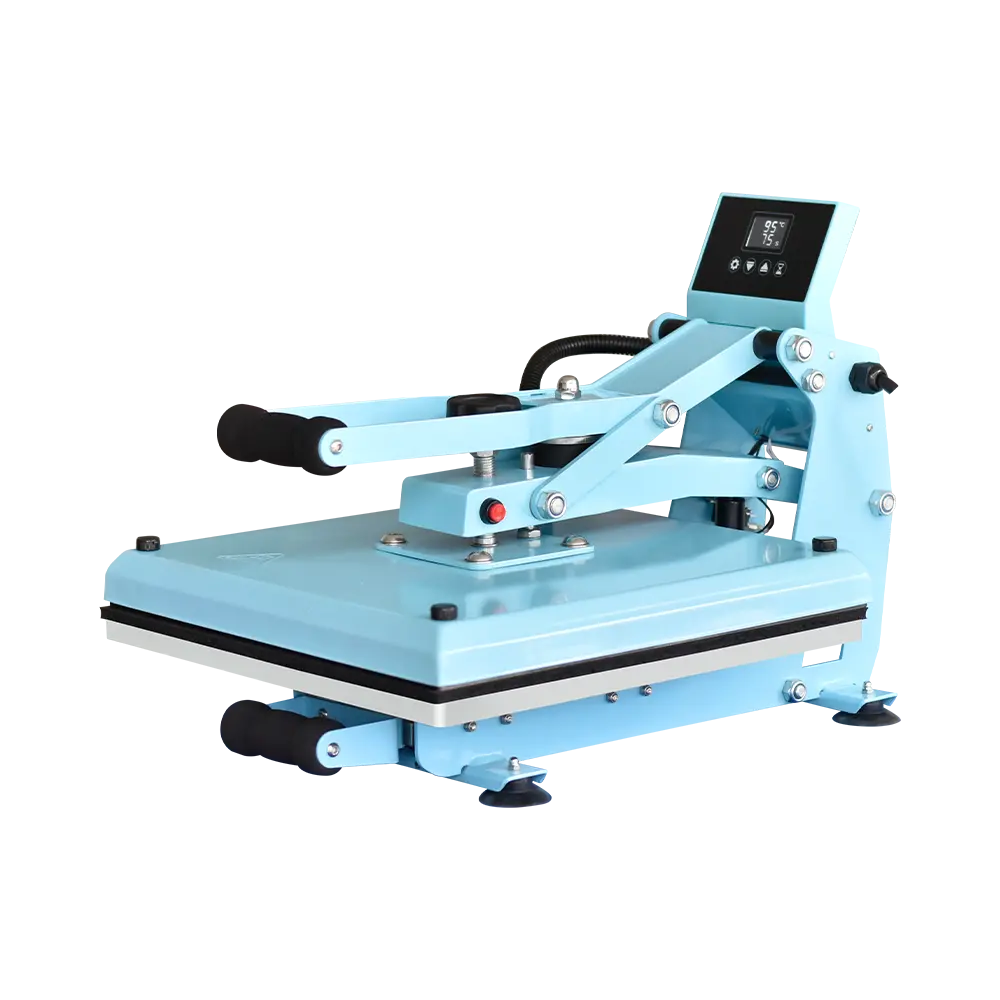
Novice users demand simple controls, but they cannot afford compromised results. An entry-level machine must deliver professional transfers from day one. When engineering or sourcing the best starter heat press for retail or direct-to-consumer channels, you must evaluate four core mechanical and electrical benchmarks.
Most budget heat presses fail at basic heat transfer physics. Novice operators frequently complain about spotty adhesion, fading graphics, and half-transferred vinyl. These errors happen because cheap heating platens suffer from wide temperature dips across their surface.
A reliable starter press must feature cast-aluminum heating platens embedded with dense, serpentine heating elements. This construction eliminates cold edges. The digital controller should hold temperatures within a strict tolerance of ±2°C across the entire platen, whether the user presses at 150°C for DTF film or 205°C for dye-sublimation paper.
Beginners do not want confusing calibration steps. They need straightforward, intuitive machinery that prevents costly human errors. Key usability features include:
Dual-channel digital controllers that display time and real-time temperature simultaneously on a crisp LED/LCD panel.
Over-the-center pressure adjustment knobs that supply smooth, tactile feedback so users can gauge light, medium, and firm pressure settings easily.
Thermal safety shielding, such as anti-scald top covers that stay cool to the touch even during long production runs.
Slide-out lower platens (drawer mechanisms) or swing-away top heads that keep hands completely away from the hot upper plate during garment layout.
Most entry-level decorators work out of spare bedrooms, garage workshops, or shared retail kiosks. The best starter heat press must maintain a compact, space-saving footprint without feeling like a flimsy toy. Structural integrity matters.
Instead of cheap bent sheet metal and plastic hinges, long-lasting entry machines use heavy-gauge, laser-cut steel frames. This rigid backbone withstands repetitive clamping force without twisting or warping over thousands of duty cycles.
Beginners quickly expand their product catalogs beyond standard graphic T-shirts. Today's crafters want to press tote bags, baby onesies, trucker hats, ceramic mugs, and neck tags. The machine design should support interchangeable platens or complement an ecosystem that handles diverse substrates seamlessly.
Beginners lack the technical diagnostic skills of veteran screen printers. When a graphic peels after the first wash, a novice cannot easily tell whether the culprit was poor platen heat distribution, incorrect pressure, or flawed transfer paper. Cheap clones amplify frustration, burn through expensive blanks, and drive hobbyists to quit.
For brands and e-commerce sellers on Amazon, Shopify, or regional distribution networks, low-quality entry machines trigger commercial disasters:
Sky-high return rates driven by thermal fuse blowouts and faulty digital relays.
Devastating one-star customer reviews that permanently destroy product listing rank.
Costly safety recalls sparked by uncertified wiring, lack of thermal insulation, or hazardous chassis grounding.
Selling a premium-engineered, best starter heat press gives hardware brands a decisive competitive edge. When a customer's very first press run yields a flawless, retail-ready T-shirt, they become loyal brand advocates who return to purchase your larger format commercial units later.
Building a successful private-label hardware brand requires true differentiation. Off-the-shelf white-label units create price wars. Custom OEM/ODM development lets you establish distinct value propositions that command healthy profit margins.
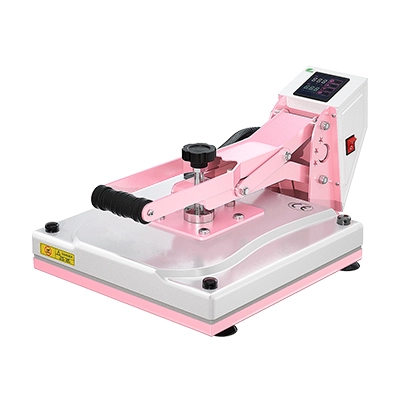
Custom Industrial Design & Colorways: Modern hobbyists care about aesthetics. Break away from boring, generic industrial gray. Work with your manufacturing partner to implement eye-catching pastel tones, sleek matte black finishes, or vibrant brand-specific color palettes paired with smooth, ergonomic handle grips.
Branded Digital Controllers & Custom Firmware: Replace generic control modules with custom-molded digital panels featuring your company logo on the splash screen. Integrate one-touch shortcut presets for popular transfer methods, including Direct-to-Film (DTF), Heat Transfer Vinyl (HTV), screen printed transfers, and sublimation.
E-Commerce Drop-Test Packaging: Shipping costs and transit damage make or break online retail margins. Build tailor-made packaging tested to strict ISTA standards. Molded high-density foam inserts, reinforced double-wall corrugated cartons, and optimized exterior dimensions prevent bent handles while minimizing dimensional weight fees.
Selecting the right contract manufacturing facility requires rigorous vetting beyond surface-level quotes. Use these four evaluation pillars to identify an industrial partner capable of supporting your growth.
Thermal machinery involves complex interactions between electrical safety, thermodynamics, and mechanical load distribution. Established factories with decades of dedicated thermal press manufacturing understand how to balance tight component costs with high-level performance. They solve heating circuit bottlenecks before steel ever hits the tooling line.
Your starter press will not stand alone forever. Choose an OEM manufacturer that also builds industrial flatbed presses, hat and cap presses, mug and tumbler presses, and specialized label presses. Sourcing your full hardware portfolio from one factory standardizes your replacement parts, simplifies logistics, and streamlines vendor management.
Never import machinery without verified regulatory documentation. Your factory partner must operate under certified ISO9001 quality management and ISO14001 environmental management frameworks. Ensure individual machine models hold authentic, SGS-audited certifications for CE, EMC, MD, LVD, and RoHS directives to breeze through customs inspections in North America, Europe, and Australasia.
Avoid trading middlemen who cannot answer basic engineering questions. Partner with factories that assign dedicated project teams, including structural engineers, electrical technicians, and bilingual project managers, to oversee your tool designs, pilot builds, and after-sales spare parts pipeline.
Heat Press Leader (XinHong Group Limited) has engineered world-class thermal transfer equipment since 2002. Over the last two decades, our manufacturing facilities have built dependable heat press hardware for international tool distributors, craft brands, and industrial printing suppliers across more than 50 countries.
We build our manufacturing foundation on proven industrial rigor:
Quality & Environmental Management: We run precision manufacturing operations audited to ISO9001 and ISO14001 standards, running multi-stage inspections on raw wiring, aluminum castings, and assembled circuits.
Certified Safety Standards: Our complete product catalog passes stringent SGS testing, holding verified certifications for CE, EMC, MD, LVD, and RoHS compliance for seamless global distribution.
End-to-End OEM/ODM Services: From initial 3D industrial concept drawings and custom PCB programming to mold production and drop-test packaging validation, our in-house engineering team handles every step.
Broad Machine Ecosystem: Beyond developing the best starter heat press for home decorators, our product family includes flatbed T-shirt presses, specialized hat and cap presses, drinkware presses for mugs and tumblers, and high-speed label presses.
We engineer every entry-level machine to the same exacting standards as our heavy commercial platforms, giving your end-users unmatched reliability at an accessible price point.
Q1: What size is ideal for the best starter heat press?
A1: A 9x12 inch or 12x15 inch platen size represents the
sweet spot for an entry-level heat press. These dimensions easily accommodate
standard letter and A4-sized graphics, adult chest designs, and youth apparel
while keeping overall machine weight low enough for affordable courier shipping
and home tabletop use.
Q2: What is the typical MOQ for custom OEM starter heat
presses?
A2: Minimum order quantities for custom OEM starter
machines generally start around 50 to 100 units for standard chassis with custom
colors, badging, and retail packaging. Fully customized exterior molds or
bespoke digital controllers typically require higher initial runs based on
tooling investments.
Q3: How does Heat Press Leader guarantee uniform heat distribution on
entry-level models?
A3: We manufacture our heating platens using
high-density, die-cast aluminum alloys with precision-milled surfaces. Our
tightly looped heating coils run close to the outer edges to eradicate cold
perimeters. We test every single platen with thermal imaging sensors before
factory packing to ensure temperature variances remain well within ±2°C.
Q4: Clamshell or swing-away: which style suits beginners
better?
A4: Both designs offer clear advantages depending on your
target customer. Clamshell models feature smaller footprints and lower shipping
costs, making them great for tight workspaces when paired with a pull-out
drawer. Swing-away models move the hot upper platen 360 degrees away, providing
complete, burn-free access to the lower platen for beginners who need extra time
to line up intricate transfers.
Q5: Can an entry-level starter press handle DTF, HTV, and
sublimation?
A5: Yes, provided the press delivers precise digital
temperature management and even clamping pressure. DTF demands stable heat
around 150°C to 160°C with moderate pressure, while dye-sublimation requires
intense heat reaching 200°C to 205°C with high, continuous pressure. A
well-built starter machine effortlessly toggles between these applications.
Entering the custom apparel hardware market in 2026 offers immense commercial upside, but only for brands that deliver dependable quality. Sourcing cutting-edge starter equipment protects your brand image, keeps customer return rates near zero, and establishes a loyal base of decorators who will grow with your business for years to come.
Building the best starter heat press requires an industrial partner with proven technical chops, international certifications, and genuine manufacturing depth. Heat Press Leader brings over two decades of engineering excellence directly to your product development pipeline.
Connect with our OEM/ODM specialist team today. Request a product catalog, discuss custom chassis designs, and get a competitive quotation on your next custom heat press production run.