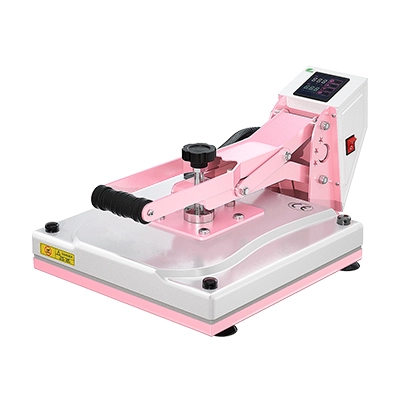
Entry-level apparel decorators, print service providers, and merchandise manufacturers often face a critical bottleneck during equipment procurement. The market is saturated with low-grade desktop thermal presses that advertise commercial capability yet fail to deliver uniform temperature or consistent mechanical pressure. Securing the best heat press for beginners requires understanding machine mechanics, thermal dynamics, and production throughput rather than settling for retail-grade hobby appliances.
Commercial decoration demands operational repeatability. Whether applying direct-to-film transfers, polyester sublimation, plastisol transfers, or heat transfer vinyl, the margin for error is governed by physics. A minor thermal drop across an aluminum platen or structural deflection in a steel frame directly converts into rejected garments, adhesive failure, and lost production hours. Sourcing equipment capable of bridging the gap between low initial capital expenditure and industrial-grade reliability represents the primary challenge for emerging printing enterprises.
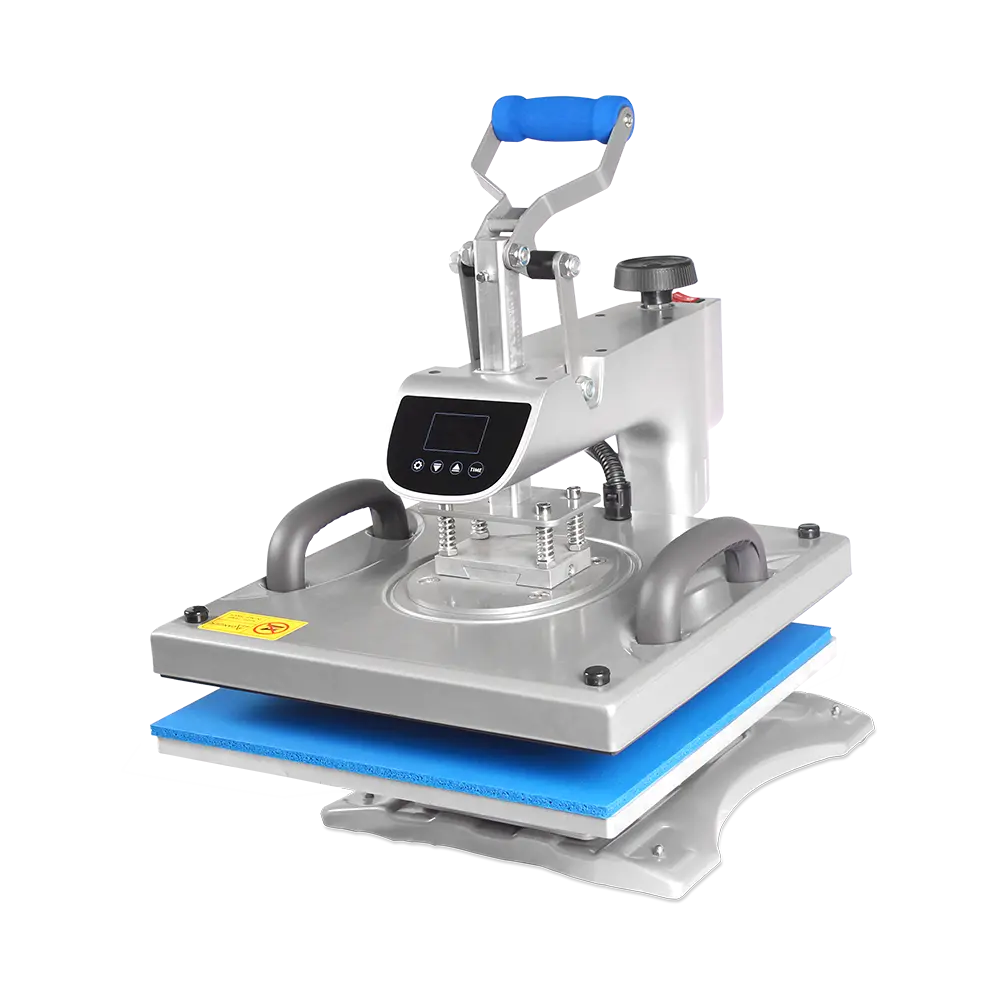
The distinction between consumer hobby presses and commercial-grade entry equipment lies in component engineering. Industrial heat presses rely on heavy-gauge structural steel, thick cast-aluminum heating platens, calibrated solid-state relays, and balanced pressure linkages designed to sustain thousands of continuous duty cycles.
Low-end consumer presses prioritize low shipping weight, utilizing thin stamped sheet metal and thin-wall heating elements. When pressure is applied via a central leverage arm, these budget frames flex. Structural deflection relieves perimeter pressure, concentrating force exclusively at the center of the platen. Consequently, perimeter transfers fail wash-fastness testing due to insufficient mechanical bonding, even when the controller indicates correct pressure settings.
Heating platen design determines temperature uniformity across the working area. High-performance manufacturing standards, such as those implemented by Heat Press Leader, mandate tubular heating elements cast directly into dense aluminum alloys. This casting technique ensures the heating loops maintain uninterrupted contact with the platen body, eliminating cold spots. In contrast, low-tier machines use surface-mounted wire elements fixed with adhesive or retaining clips, which warp over thermal cycles and generate temperature differentials exceeding 15°C across a standard 15x15 inch surface.
Equipment geometry governs workflow efficiency, operator ergonomics, substrate thickness accommodation, and workshop safety. When determining the best heat press for beginners, facility managers must evaluate the physical mechanics of clamshell, swing-away, and draw configurations against their expected application mix.
Clamshell designs utilize a rear-hinged upper platen that opens upward at an angle. The mechanical simplicity of the clamshell footprint makes it exceptionally popular for localized workstations and mobile production setups.
Floor Space Efficiency: The clamshell requires minimal lateral clearance, operating entirely within its vertical footprint.
Cycle Speed: Fast open-and-close kinematics streamline high-volume, thin-substrate runs such as standard cotton t-shirts and tote bags.
Substrate Limitations: The fixed-angle hinge introduces uneven pressure distribution when pressing thick garments, hoodies, or rigid promotional blanks exceeding 10 mm in thickness. The rear edge contacts the substrate prior to the front edge, requiring specialized floating-head adjustments to compensate.
Swing-away designs elevate the upper heating platen vertically before rotating it horizontally 180 degrees away from the lower loading station.
Perpendicular Pressure Application: The upper platen descends strictly parallel to the lower platen, distributing mechanical force evenly across the entire surface regardless of substrate thickness.
Clear Ergonomic Access: Moving the hot platen completely away from the working area provides an unobstructed, heat-free zone for garment alignment and complex multi-layer graphic placement.
Footprint Requirements: Swing-away presses demand substantial lateral workspace to accommodate the swing radius of the heated platen assembly.
Draw presses integrate a lower platen mounted on industrial linear guide rails, pulling forward toward the operator while the heated upper platen remains stationary.
Stationary Upper Assembly: Reduces stress on internal high-voltage wiring by keeping the primary electrical enclosure static.
Safety and Layout Precision: Operators stage garments entirely clear of the upper heat zone without consuming the lateral clearance required by swing-away models.
Identifying the best heat press for beginners involves looking past marketing terminology to evaluate quantifiable technical metrics. Procurement decisions must align machine specifications with the thermal demands of modern transfer chemistries.
Platen mass and wattage define thermal recovery speed. When ambient-temperature fabric enters the press, it absorbs heat energy directly from the platen. A lightweight heating plate experiences immediate temperature drop, often requiring 30 to 45 seconds to recover to the setpoint. In continuous production environments, this drop delays the cycle or causes under-cured transfers. Commercial entry units utilize minimum 1800W to 2200W heating circuits backed by high-density aluminum platens that act as thermal reservoirs, stabilizing temperature variance within ±2°C between pressing cycles.
Digital temperature control logic determines execution accuracy. Basic analog thermostats or low-resolution microcontrollers exhibit broad hysteresis loops, cycling power only after temperatures drift significantly. Commercial systems utilize proportional-integral-derivative controllers paired with platinum resistance temperature detectors. These digital controllers sample platen surface temperatures continuously, pulsing power in millisecond intervals to ensure precise thermal adherence across heat-sensitive synthetics.
Pressure generation mechanisms dictate human fatigue and transfer durability. Over-the-center leverage linkages ensure that the mechanical advantage peaks precisely at the moment of platen lock-down. This engineering reduces the physical force an operator must exert to achieve high-pressure thresholds, maintaining consistent mechanical pressure across an eight-hour shift.
Production environments seldom rely on a single transfer modality. The best heat press for beginners must accommodate various transfer technologies without requiring structural modifications or secondary machinery.
Direct-to-Film represents the current standard for commercial customization. Direct-to-film adhesive powders require firm, uniform mechanical pressure coupled with precise low-temperature curing, typically between 130°C and 150°C. Cold spots cause partial adhesive melting, leading to premature wash peel, while uneven pressure results in visible texture variances on the finished garment.
Dye sublimation operations present opposite operational demands. Sublimating polyester requires elevated temperatures, consistently around 200°C, and extended dwell times ranging from 35 to 60 seconds. Thermal instability causes dye gas dissipation issues, manifesting as color banding or inconsistent saturation across wide-format designs. The heating assembly developed by Heat Press Leader integrates continuous multi-path heating coils specifically calibrated to maintain stable output throughout prolonged high-temperature cycles.
Screen-printed plastisol transfers and silicone elastomers require immense downward force to drive viscous inks into fabric weaves. Low-grade frames deflect under these operational thresholds, resulting in incomplete transfer release along garment perimeters. An entry-level machine must feature heavy structural wall thicknesses to withstand continuous downward clamping forces without structural elongation.
Integrating a heat press into a commercial workflow requires attention to setup variables, clean electrical distribution, and foundational maintenance protocols. Machine durability rests on basic preventative care cycles designed to eliminate unplanned downtime.
Dedicated electrical circuits prevent thermal inconsistencies. Industrial heat presses draw substantial continuous current during heating phases. Running a high-wattage press on a shared line or through light-duty extension cables causes voltage drops. These drops extend heat-up cycles, disrupt controller logic, and degrade internal heating elements over time. Always connect the unit directly to a verified, grounded 15-amp or 20-amp commercial breaker.
Platen maintenance protects production yields. Fluoropolymer non-stick coatings or dedicated protective covers prevent stray inks, adhesives, and pre-treatment residues from baking onto the upper aluminum face. Contaminants on bare aluminum create uneven surface textures and introduce localized insulation barriers. Regularly inspecting the lower silicone or sponge rubber pad ensures the substrate bed remains resilient. Over time, high-pressure cycling degrades lower pad elasticity, necessitating replacement to maintain uniform contact geometry.

Procurement teams should verify the following mechanical and structural criteria prior to finalizing an equipment investment:
Platen Thickness: Confirm a minimum 15 mm to 20 mm thick cast-aluminum platen for optimal thermal storage and heat retention.
Frame Construction: Select laser-cut, welded steel structures over stamped aluminum or plastic-reinforced outer shells.
Controller Engineering: Ensure dual-display digital readouts isolate temperature and dwell time with integrated cycle counters.
Interchangeable Lower Platens: Verify the presence of quick-release mechanisms that allow swapping standard beds for shoe, sleeve, or youth platens.
Pressure Adjustment Mechanicals: Look for central over-the-center pressure knobs or micro-adjustable linkages that apply force perpendicularly across the plate.
Serviceability: Confirm direct access to replacement relays, thermocouples, and heating elements to enable on-site maintenance without total machine replacement.
Prioritizing structural engineering and measurable thermal stability enables startups to avoid the cycle of continuous machine replacement. Investing in the best heat press for beginners means securing an asset engineered for immediate production reliability and sustained long-term utilization.
The primary differences center on structural steel thickness, platen casting methodology, and thermal regulation components. Cheap units feature thin stamped metal that flexes under pressure, alongside surface-mounted wire heating elements that create cold zones. Commercial beginner presses utilize solid cast-aluminum platens with embedded tubular elements and rigid steel frames that deliver consistent pressure and maintain thermal stability within ±2°C across the entire pressing surface.
Starting with a pneumatic machine is entirely feasible if the initial budget and physical infrastructure allow for an industrial air compressor. Pneumatic presses remove human fatigue entirely and provide exact, programmable air pressure settings via onboard regulators. However, for operations prioritizing low initial investment and spatial versatility, an industrial-grade manual press with an over-the-center mechanical linkage provides commercial-grade pressure output without auxiliary air supply requirements.
A 15x15 inch (38x38 cm) or 16x20 inch (40x50 cm) platen size represents the industry standard for starting operations. The 16x20 inch platen accommodates standard adult t-shirt transfers, oversized graphics, hoodies, and cut-panel pieces without spatial restrictions. Smaller platens, such as 9x12 inches, restrict production capabilities and create workflow bottlenecks as customer order requirements expand.
Edge adhesion failure typically indicates platen deflection or perimeter heat loss. When clamping down, lower-grade structural frames bow upward in the center, reducing mechanical pressure along the perimeter edges. Alternatively, uncalibrated heating elements cause outer edges to run cooler than the central thermocouple reading. Testing the platen surface with an external contact pyrometer identifies whether structural flexing or thermal variations are responsible for application defects.
Thick platens possess greater thermal mass, acting as consistent energy reservoirs. When cold garments are introduced into the press, thick platens absorb the load without significant temperature drops, allowing rapid thermal recovery between press cycles. Thin platens drop drastically in temperature upon substrate contact, forcing the operator to wait for the element to heat up again before beginning the next cycle, slowing hourly output.
Establishing a dependable apparel or promotional printing business begins with sound equipment engineering. Heat Press Leader manufactures and engineers industrial thermal transfer solutions tailored for evolving operational requirements. For equipment distributors, contract decorators, and enterprise startups seeking production-grade hardware, our engineering team provides customized OEM manufacturing, specialized platen geometries, and comprehensive technical support.
Submit your technical specifications, expected production volume, and substrate parameters to our engineering team today to receive a detailed product consultation, tailored equipment configuration, and a direct commercial quotation.