

A shirt press machine is often sold as a T-shirt tool. In real shops, the work is broader: polos, button-ups, uniforms, aprons, and workwear.
Buttons, collars, plackets, pockets, and thick seams change how the garment sits on the platen. The machine and the operator have to handle those details.
This guide is for uniform suppliers, workwear decorators, and promotional shops choosing a press for mixed garment work.
Heat Press Leader builds manual, semi-automatic, and dual-station presses for apparel decorators. If you are sourcing for a uniform program, send your garment types and weekly volume early. A short brief gets you a machine recommendation and a quotation instead of a generic spec sheet.

What a shirt press machine needs to handle
The machine has to do more than press a flat cotton tee. The garment may have a button placket, a collar stand, a chest pocket, a curved hem, or a thick seam.
Flat print area: the platen should support the full design without lifting at the edges.
Buttons and zippers: these raised parts should stay outside the press zone or be repositioned before pressing.
Collars and plackets: double layers need even pressure without crushing the shape.
Pockets and seams: thickness changes the pressure across the print.
Fabric blends: polyester, cotton, and blends need different heat and pressure.
Size range: youth, women's, and plus-size shirts need different loading positions.
The best machine for a T-shirt may not be the best for a button-up. The platen and the loading method matter as much as the heat.
Shirt press machine recommendations by buyer type
Different buyers need different balances. These profiles help narrow the field before you compare prices.
Uniform and workwear suppliers
Uniform work repeats the same logo, name, or department mark across many garments. A semi-automatic 16 x 20 press gives consistent pressure and a loading area that can handle thicker workwear fabrics.
Look for a stable frame and a controller that holds its settings. The same job may run for months; consistency matters more than a long feature list.
Corporate and hospitality apparel
Corporate polos, aprons, and hospitality shirts often need small left-chest logos and precise placement. A manual press can work well when one operator controls the placement, while a semi-automatic press helps when several people share the work.
Check the collar and placket clearance. A logo that sits close to a seam needs a loading position that keeps the area flat.
Healthcare and school uniforms
Names, numbers, department marks, and school badges are usually small but repeat often. A 16 x 20 platen gives room to position the garment, and a clear controller helps different operators repeat the same setup.
Test the fabric blend before production. Healthcare scrubs and school shirts often use polyester blends that are sensitive to heat.
Promotional and event shirt shops
These shops handle many fabrics and designs in a week. A manual press is flexible for small runs, while a semi-automatic or dual-station press helps when orders grow.
Keep a setup sheet for each shirt type. A fast changeover is more valuable than a machine that needs a specialist for every job.
Screen printers and embroidery shops
These shops add heat transfer for names, numbers, and short runs. A semi-automatic or dual-station press fits an existing production floor better than a manual unit when several staff members share the work.
Measure the floor space and the loading path. A press that blocks the screen-print area slows down both processes.
Small custom and retail shops
A manual 16 x 20 swing-away press is the simplest fit. It costs less, takes one operator, and gives direct feedback through the handle. For low volume and mixed shirts, that feel is useful.
Put the budget into a stable frame and a controller that holds temperature. Those details affect reject rates more than extra features.
What to check on a shirt press machine
The spec sheet should answer these questions before the machine arrives.
Platen size and clearance
A 16 x 20 inch platen covers most adult fronts and backs. A 15 x 15 inch platen suits smaller spaces and lighter work. Check the clearance around the platen for collars, buttons, and thick hems.
Pressure and thickness
Uniform shirts, hoodies, and canvas aprons need more pressure adjustment than a thin tee. The clamp should open wide enough and return to the same setting. A numbered control helps operators record a recipe.
Heat uniformity
Ask for a temperature map at production heat. A display reading at the sensor does not guarantee the corners. Cold corners cause peeling; hot spots scorch polyester and leave shiny marks.
Controller and dwell time
The controller should hold temperature, count dwell time, and signal the end of the cycle. A clear display reduces training time. A lockable setting prevents accidental changes between shifts.
Frame and loading access
A shirt press takes repeated force. Check the frame, base, and handle. The loading area should let the operator position a collar or placket without stretching the shirt.
Safety and electrical
Press safety starts with risk assessment. ISO 12100:2010 sets the general principles for identifying hazards and reducing risk in machine design, including the clamp, the heated platen, and the loading area.
Electrical equipment should follow IEC 60204-1, the international reference for the electrical equipment of machines, including emergency-stop and protective bonding requirements.

Pressing shirts with buttons, collars, and seams
The print area should sit flat. Reposition the shirt so buttons, zippers, and plackets are outside the press zone, and test the setup before a production run.
Button-up shirts: press the print area, not the button line. A raised button can create a pressure point and damage the platen or the transfer.
Polos and collars: keep the collar stand out of the clamp. A crushed collar is a visible defect.
Chest pockets: the pocket seam adds thickness. Check the pressure across the print, not only at the center.
Sleeves: load the sleeve so the seam does not sit under the design. A narrow platen can help with small sleeve prints.
Thick seams: increase dwell or pressure carefully, and test the bond before a full run.
Blends: lower the heat for polyester-rich shirts and test for scorch, gloss, and dye migration.
A shirt press machine that works on a cotton tee may fail on a polyester uniform shirt. Match the settings to the fabric, not only to the transfer.
For wash durability, follow a recognized method such as ISO 105-C06, then wash a sample the way the end user will. Uniform shirts are washed often; a transfer that looks good on the bench can fail after a few cycles.
Manual, semi-automatic, or dual station?
These are workflow choices, not trim levels. A shirt press machine can be manual and still excellent; it can be automatic and still wrong for a small shop.
Manual: lowest cost, direct feel, easy service. Best for low volume, sampling, and one experienced operator.
Semi-automatic: controlled clamp stroke, repeatable pressure, less fatigue. Best for repeat uniform orders and shared presses.
Dual station: overlapping load and press cycles. Best when loading time, not heating time, limits output.
Swing-away: clears the loading area and keeps heat away from the hands. Needs side clearance.
Clamshell: compact footprint, but the heated platen stays above the loading area.
A dual station does not make a slow operator fast. It removes waiting. If the operator spends most of the cycle loading a button-up or aligning a collar, a second station or a better loading position helps more than a faster heating element.
Workflow and throughput
Throughput comes from the whole cycle: preheat, load, press, peel, cool, and fold. The dwell time is only one part of the number.
Preheat: warm the shirt briefly to remove moisture and relax the fabric.
Load: center the design, clear the buttons and seams, and check the collar before the platen closes.
Press: hold the temperature, pressure, and dwell time the transfer needs.
Peel and cool: follow the supplier's peel direction, then let the shirt cool before folding.
Batch: group similar fabrics and placements to reduce temperature changes and setup time.
A second station helps when loading is the bottleneck. One platen can be loaded while the other presses, so the operator does not wait through every cycle. The gain comes from overlap, not from a higher peak temperature.
Where Heat Press Leader fits
Heat Press Leader, operated by Fujian Mech & Elec Co., Ltd., manufactures heat transfer equipment for apparel decorators. The shirt press machine range covers manual, semi-automatic, and dual-station configurations.
Manual 16 x 20 swing-away press: flexible small-batch work, sampling, and shops with one main operator.
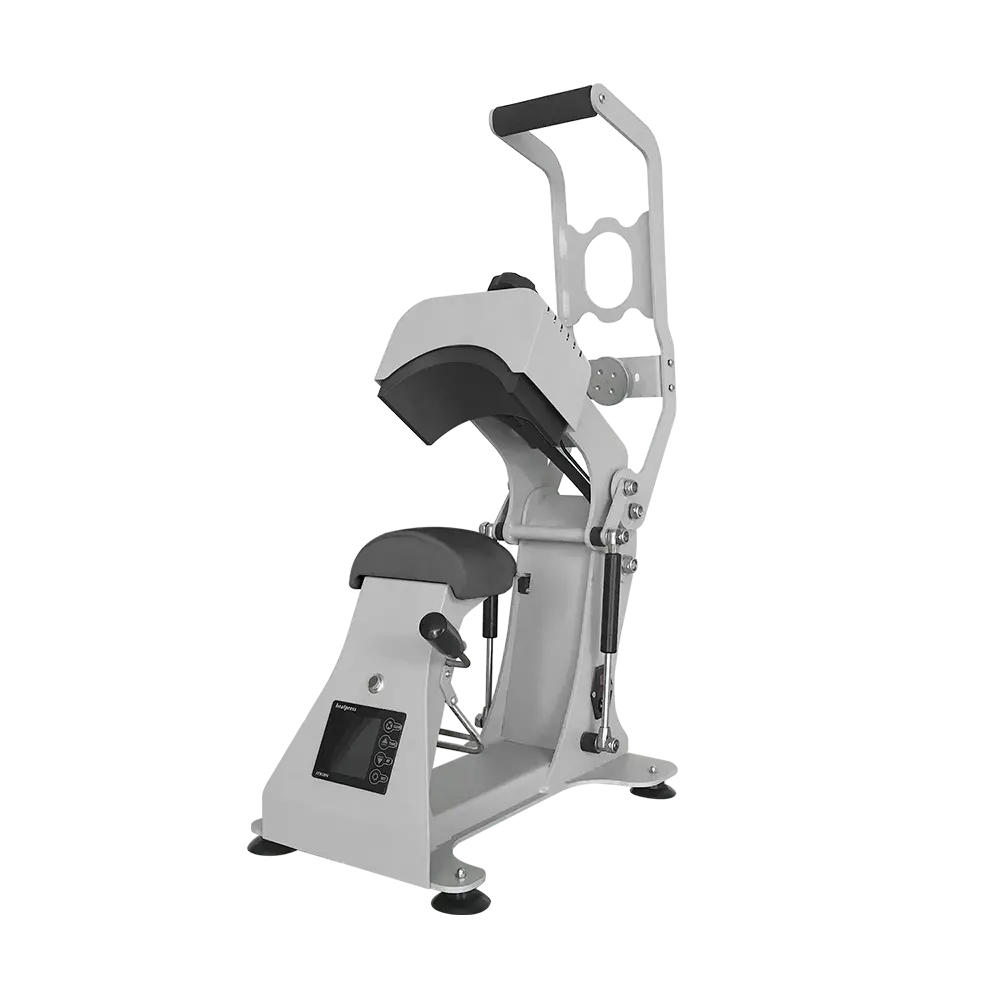
16 x 20 semi-automatic swing-away press: repeat uniform orders and teams that need consistent clamp pressure.
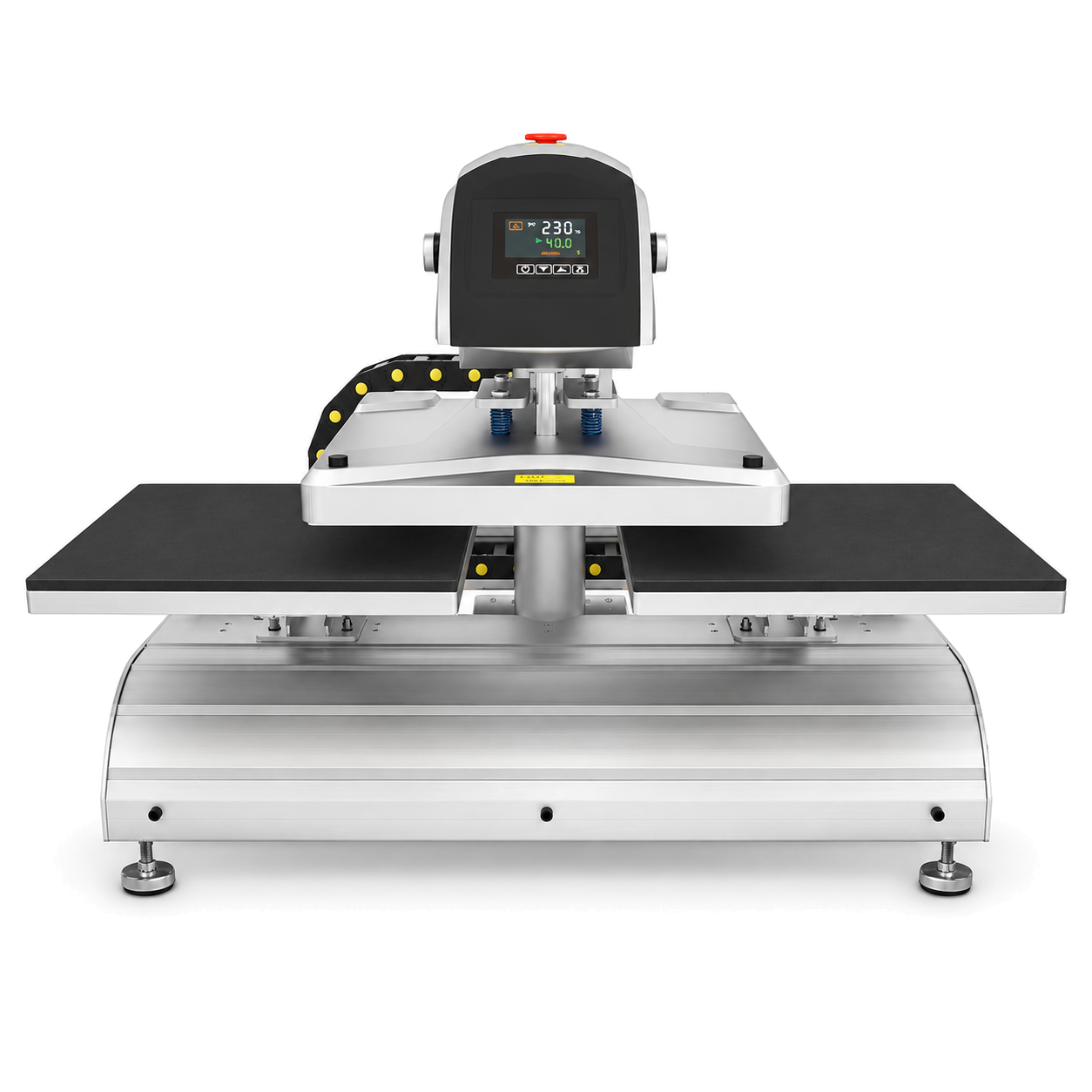
16 x 20 automatic electric dual platen press: higher throughput and overlapping load/press cycles.
Ask about voltage, plug type, lead time, and OEM or private-label options for your market. Those details affect installation and resale more than a headline speed number. The company's manufacturing background is worth reviewing before you shortlist.
Common mistakes
Most shirt pressing problems start before the platen closes.
Treating every shirt like a cotton tee. Buttons, collars, and blends need different handling.
Pressing over buttons or zippers. A raised point can damage the transfer, the platen, or the garment.
Setting pressure by feel. Without a recorded setting, the next operator starts from zero.
Skipping a temperature map. The display can be right at the sensor and wrong at the edge of the platen.
No wash test. Uniform shirts are washed often; a weak bond shows up quickly.
Choosing a platen that is too small. A design that runs to the edge needs room to position the garment.
Forgetting training. The same press gives different results when nobody agrees on load position and dwell time.
A sample run and a written setup sheet prevent most of these problems. Neither takes long, and both make the next uniform order easier.
Frequently asked questions
Q1: What is a shirt press machine?
A1: It is a heat press used to bond transfers to shirts, including tees, polos, button-ups, and uniform shirts. It applies controlled heat, pressure, and dwell time.
Q2: Can a shirt press machine press button-up shirts?
A2: Yes, if the print area is positioned away from buttons, the placket, and the collar. The operator should test the setup and check the pressure across the print before a production run.
Q3: What platen size should I choose?
A3: A 16 x 20 inch platen covers most adult fronts and backs. A 15 x 15 inch platen suits smaller spaces and lighter work. Measure your largest common design and add a margin.
Q4: Manual or semi-automatic for uniform work?
A4: For low volume and one operator, manual is often enough. For repeat orders, multiple operators, or consistent pressure, semi-automatic is the better fit.
Q5: How do I check wash durability?
A5: Follow a recognized method such as ISO 105-C06, then wash a sample the way the end user will. Check the edges, seams, and collar area, where a transfer is most likely to lift.
Request a shirt press recommendation
A useful inquiry includes more than a request for price. Tell the team what you press and how the work flows.
The shirt types you handle most often: tees, polos, button-ups, uniforms, or workwear.
The fabrics you press, including cotton, polyester, blends, and fleece.
The largest transfer size you sell, in inches or centimeters.
Average and peak weekly volume, plus the number of operators per shift.
Available floor space, including the swing arc, loading table, and cooling area.
Voltage, plug type, destination, delivery date, and any OEM or private-label requirement.
Send those details to Heat Press Leader and ask for a comparison of two or three suitable models. The right shirt press machine is the one that fits your garment mix, your floor, and your team, not the one with the longest feature list.
Sources and further reading
ISO 12100:2010: Safety of machinery — General principles for design — Risk assessment and risk reduction — the basis for press hazard identification and risk reduction.
IEC 60204-1:2016/AMD1:2021: Safety of machinery — Electrical equipment of machines — Part 1: General requirements — the international reference for machine electrical equipment.
ISO 105-C06:2010: Textiles — Tests for colour fastness — Colour fastness to domestic and commercial laundering — a recognized wash-test method for transfer durability.