A craft press heat press does one job: it delivers controlled heat and pressure to a transfer. That sounds simple until you run forty shirts in a day, switch from cotton to polyester, or train a new operator. Then the differences between machines become obvious.
Most buyers compare price first. A better starting point is the work itself. What are you pressing, how large is the transfer, and how many pieces pass through the shop each week? Those answers narrow the choice faster than any spec table.
This guide groups machines by the people who use them. It covers manual swing-away presses, automatic dual platen units, mug presses, and compact models. Heat Press Leader builds all four categories, so the recommendations below reflect production trade-offs rather than catalog theory.
If you are sourcing for a team, send your substrate list and daily output to Heat Press Leader early. A short brief gets you a specific machine recommendation and a quotation, not a generic brochure.
Write down four numbers before you open a catalog: the largest transfer you sell, the average order size, the hours the press runs each day, and the floor space you can spare. These four numbers eliminate most wrong choices.
Substrate matters just as much. Cotton, polyester, blends, canvas, and coated drinkware behave differently under heat. A craft press heat press that holds temperature well gives you room to adjust. One that drifts during a run forces the operator to babysit every cycle.
Largest print area: measure the artwork, not the garment. A design that fits a youth shirt may not fit an adult back print.
Peak volume: average orders hide the Friday rush. Plan for the busiest week, not the quiet one.
Operator skill: a manual press rewards experience. An automatic press reduces the gap between a new hire and a veteran.
Electrical supply: confirm voltage, phase, and circuit capacity before the machine ships.
Workspace: allow clearance for the swing arm, the loading table, and the operator's movement.
Once you have those answers, the machine shortlist usually falls into place. The rest of this guide explains why each type suits a particular kind of buyer.
No single craft press heat press suits every buyer. The list below matches machine types to common business profiles. Use it to build a shortlist, then verify the details with a sample or a live demonstration.
You need a compact machine that heats evenly and stores easily. A mini digital heat press handles hats, small chest prints, and samples without taking over a room. When orders grow to full-size fronts and backs, move up to a 16 x 20 inch manual press.
Watch the duty cycle. A hobby-level unit that runs twenty minutes a day is not built for two hundred pieces before a weekend market. Ask how the frame and heating element handle continuous use, and check whether the platen reaches the edges of your typical design.
Heat Press Leader's mini digital heat press fits this stage well. It gives a new business a low-risk way to test designs before committing to a larger production machine.
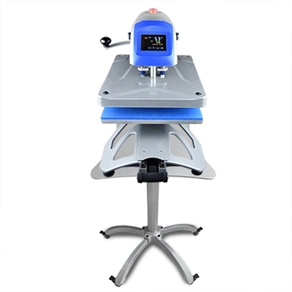
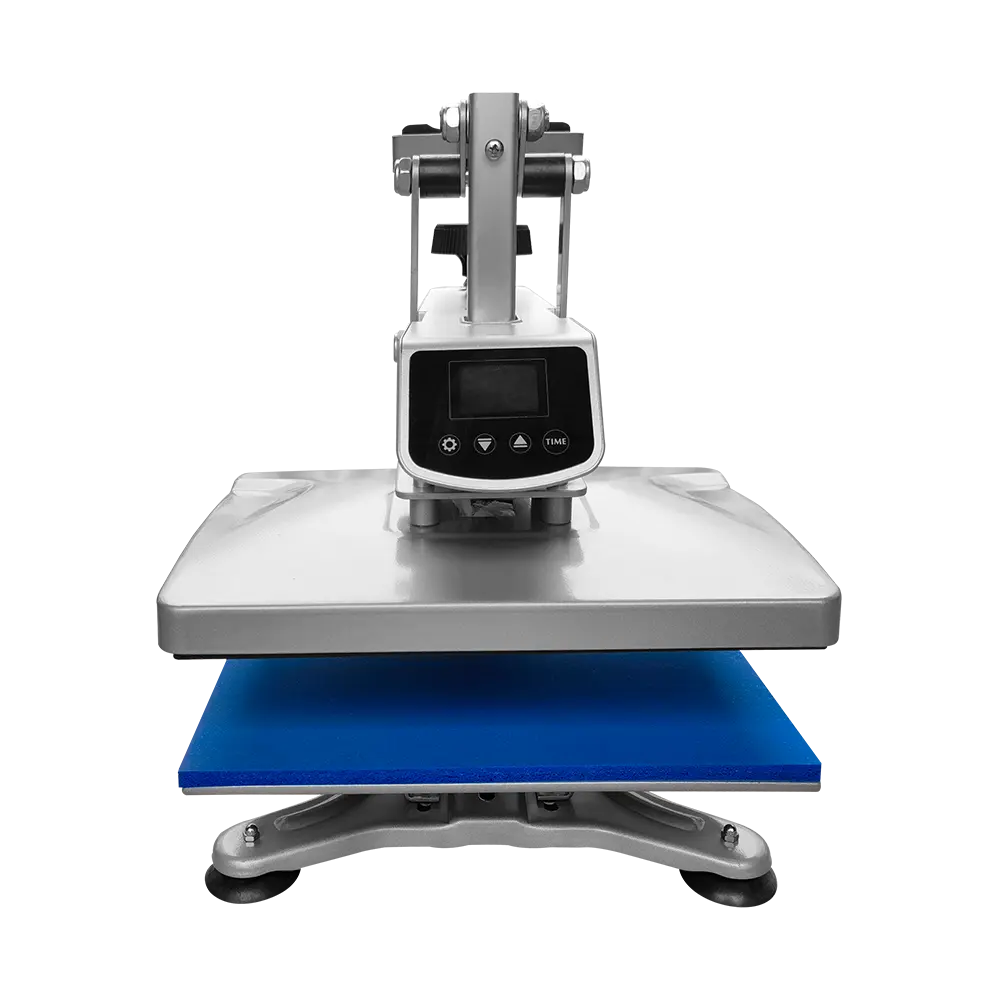
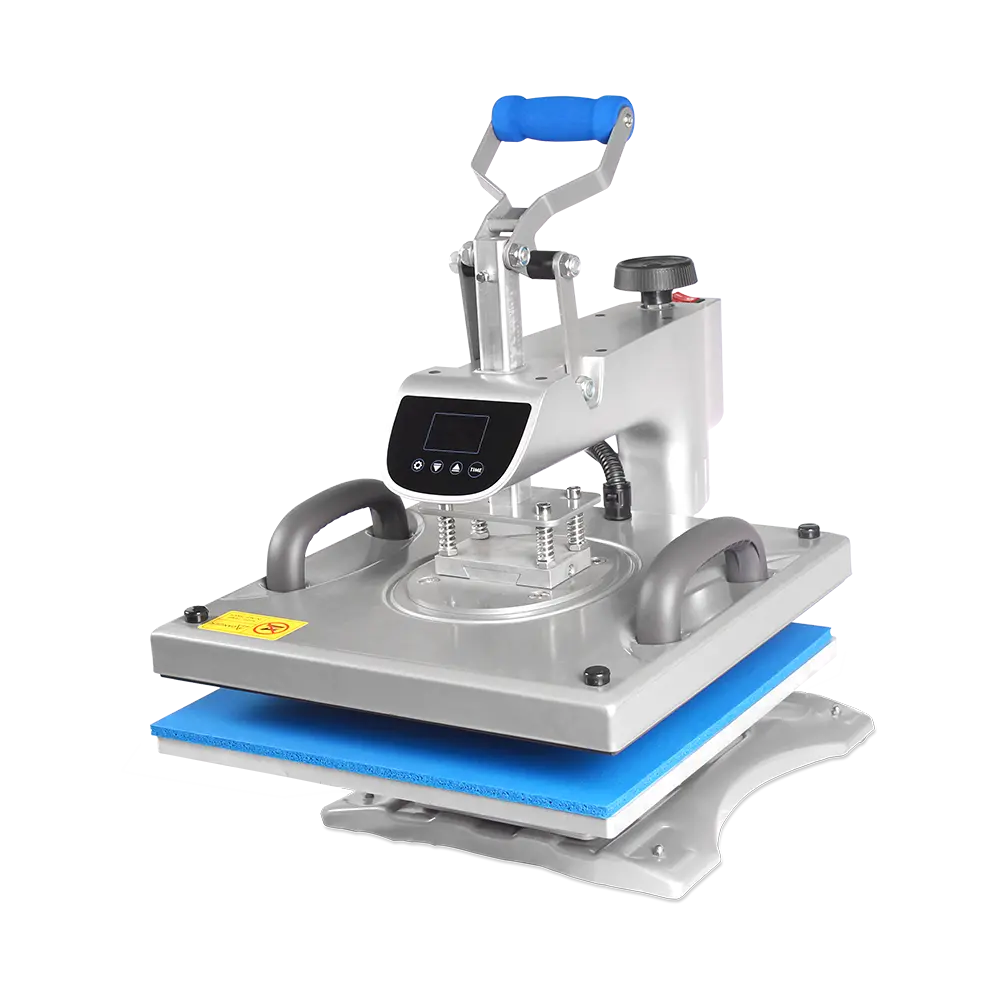
A 16 x 20 inch swing-away manual press is the workhorse here. The platen covers standard adult fronts, backs, and most placement work. The swing arm keeps the heating element away from the garment while you load, which matters when you press in batches.
Look for adjustable pressure, a stable frame, and a controller that holds its set temperature. A weak frame shows up as uneven pressure at the edges. That leads to peeled transfers and customer returns, even when the heat setting looks correct.
The 16 x 20 swing-away manual heat press from Heat Press Leader is designed for this kind of mixed daily work. It handles shirts, totes, and flat fabric goods without the complexity of a fully automatic line.
Shops already running a screen press often add heat transfer for names, numbers, nylon, and short runs. Consistency beats raw speed in this setup. An automatic electric press removes the operator-to-operator variation that comes from pulling a handle by feel.
A dual platen design lets one operator load a shirt while the other station presses. That overlap is where the throughput gain comes from, not from a higher peak temperature. You get more completed pieces per hour from the same floor space and the same person.
The 16 x 20 automatic electric dual platen heat press runs without an air compressor, which simplifies installation for shops that do not have compressed air at the press station.
This work is mixed. One day it is tote bags, the next it is polo shirts, then lanyards or canvas pouches. You need a press with a wide temperature range, reliable pressure at low settings, and a platen that accepts flat goods of different thicknesses.
Fast, repeatable setup matters more than automation. If your team changes jobs five times a day, a manual press with clear controls often beats a complex automatic line. The operator can feel the pressure and adjust for a thick canvas bag or a thin performance shirt.
Keep a written setup sheet for each product family. Record the temperature, pressure setting, and dwell time that worked. That record is more valuable than a vendor's generic recipe, because it matches your transfers, your fabric, and your press.
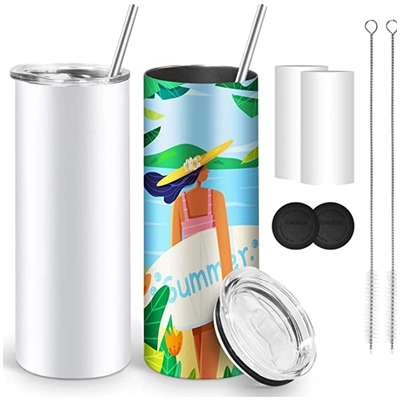
Curved surfaces need a different approach. A craft auto touch mug press wraps a heated element around the mug and applies controlled pressure through a clamp. The result depends on a snug fit and stable temperature across the curved surface.
Check the diameter range before you commit. Standard 11 oz mugs are only one part of the market. Travel tumblers and tapered cups need a press that follows the shape without creating hot spots or uneven color.
Heat Press Leader's craft auto touch mug press is built for sublimation mug printing. Pair it with a flat press when your orders include both drinkware and apparel.
These buyers need safety, simple controls, and repeatable settings that different people can follow. A press with a clear digital display and a lockable temperature setting reduces mistakes. A manual swing-away is often the better teaching machine because the operator can see the entire load and unload step.
Durability matters here. Shared equipment takes more abuse than a single-operator bench. Check the frame, the handle, and the heating element for service access, and ask how the controller behaves after a long idle period.
Catalogs tend to lead with platen size. That number matters, but it is not the whole story. These five details decide whether a craft press heat press still feels solid after six months or starts costing you rework.
Measure your largest common transfer, then add a margin. A 16 x 20 inch platen covers most adult garment work, while a 15 x 15 inch platen fits smaller spaces and lighter production. For sleeves, legs, and small goods, a narrower platen is easier to position.
Do not assume a larger platen is always better. It draws more power, takes longer to heat, and needs more clearance. Match the platen to the work you actually sell, not to the largest job you might win someday.
Manual presses rely on a knob, spring, or gas strut. Automatic electric presses use a motor or a pneumatic cylinder. Both can work well. The real question is whether the same setting produces the same result at nine in the morning and four in the afternoon.
Ask for a pressure repeatability check. If the supplier cannot explain how the press maintains pressure across the platen, keep looking. Pressure drift shows up as faded transfers, uneven edges, and inconsistent hand feel.
A display reading of 170°C does not mean every corner of the platen is at 170°C. Cold corners cause transfers to peel. Hot spots scorch polyester and leave shiny marks that cannot be fixed.
Request temperature test data for the center, edges, and corners. Run your own test with a heat-sensitive strip or a calibrated probe before you approve a bulk order. A supplier who shares this data openly is easier to trust.
Good controls do three things: hold temperature, count dwell time, and signal the end of a cycle. A press that drifts or forgets its timer forces the operator to watch the clock instead of preparing the next garment.
For teams, a lockable setting prevents accidental changes between shifts. For sampling labs, a fast heat-up and a clear readout save time on every development round.
A swing-away press needs clearance for the arm. A dual platen press needs room for two loading positions. Check the circuit capacity and voltage before delivery, because a large platen draws more current than a small one.
Operator height matters too. A press mounted too low or too high causes shoulder strain over a full shift. Set the work surface at a height that keeps the forearms level during loading and unloading.
This is the decision most buyers get wrong. They buy automatic for a shop that runs thirty pieces a week, or manual for a team that needs three hundred a day. Neither choice is wrong on its own. The mismatch between the craft press heat press and the workload is the problem.
Manual swing-away: lower cost, simple service, flexible for mixed jobs. Best for low to medium volume, sampling, and shops with experienced operators.
Automatic electric: consistent pressure and cycle times, less fatigue. Best for repeat orders and teams that share one press across shifts.
Dual platen: overlapping load and press cycles. Best when loading time, not heating time, limits your output.
Mug press: dedicated curved-surface work. It does not replace a flat platen for garments.
Mini press: sampling, hats, small goods, and tight spaces. It is a supplement to a full-size press, not a substitute for one.
A simple test: if your operator waits for the press more than the press waits for the operator, you need more capacity. If loading and positioning take most of the cycle, a larger platen or a second station helps more than a faster heating element.
Heat Press Leader, operated by Fujian Mech & Elec Co., Ltd., manufactures heat transfer equipment for craft businesses, garment decorators, and promotional suppliers. The range covers manual swing-away presses, automatic electric dual platen machines, mug presses, and mini digital units. That spread lets a buyer match a craft press heat press to a specific production profile instead of forcing one model to do every job.
Manual 16 x 20 swing-away press: flexible small-batch work and mixed substrates.
Automatic 16 x 20 electric dual platen press: higher throughput without compressed air.
Craft auto touch mug press: curved drinkware and sublimation mug projects.
Mini digital heat press: samples, hats, and small-format transfers.
If you need OEM or private-label production, include that in your inquiry so the team can confirm options and lead time. Ask for the current configuration list and the available control options. That information makes a quote easier to compare across suppliers.
Most heat press problems appear after the first large order, not during the demo. These are the mistakes buyers report most often.
Buying on platen size alone. A large platen on a weak frame still gives uneven pressure.
Skipping a temperature map. The display can be accurate at the sensor and wrong at the corner.
Ignoring the power supply. A machine that trips a breaker on every cycle disrupts the whole shop.
Choosing a press with no pressure adjustment. Thin and thick goods need different settings.
Forgetting operator training. The same press produces different results when nobody agrees on dwell time.
Treating a mini press as a production unit. It is a sampling and small-goods tool, and it wears out faster under daily volume.
A short pre-purchase checklist prevents most of these issues. Test the press with your own materials, at your own production temperature, before you place a bulk order.
Q1: What should I check first on a craft press heat press?
A1: Start with the largest transfer you sell and your busiest week of output. Those two facts set the minimum platen size and the press type. After that, compare pressure repeatability and temperature uniformity. A machine that holds both is easier to train on and produces fewer rejects.
Q2: Is a dual platen press worth it for a small shop?
A2: Only when loading time is the bottleneck. If one operator loads a shirt, closes the press, and waits for the cycle, a second platen keeps that person working during the dwell time. If your volume is thirty pieces a week, a manual press is usually the better use of budget.
Q3: Can one heat press handle HTV, DTF, and sublimation?
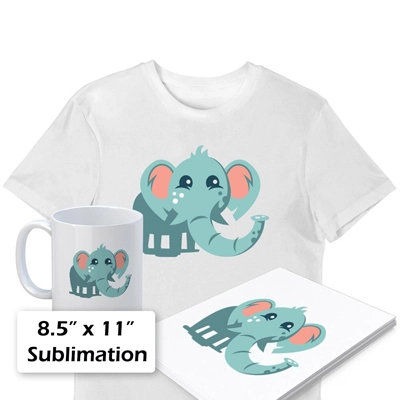
A3: Many flat presses can, as long as the temperature range and platen size fit the job. The settings are different. HTV usually needs medium pressure and a short dwell, DTF needs firm pressure and careful peel timing, and sublimation needs higher heat and lighter pressure. Always follow the transfer supplier's chart and test on scrap fabric first.
Q4: How can I verify temperature uniformity before I order?
A4: Ask for a temperature map of the platen at production heat, not just a single setpoint claim. Then test the center and four corners with a calibrated probe or heat-sensitive strips. An infrared thermometer can help for a quick check, but emissivity makes it unreliable on bare metal. A supplier who provides real test data is a safer partner.
Q5: What platen size should a growing apparel brand choose?
A5: A 16 x 20 inch platen covers most adult fronts and backs and gives you room to position artwork without crowding the edge. Choose a 15 x 15 inch platen only if space or budget is tight and your designs are smaller. Measure your largest seller before you decide, then add at least two inches of margin around it.
A useful inquiry includes more than a request for a price list. Tell the team what you press, how large it is, how many units you run, and where the machine will be installed. That gives them enough to recommend a press type and configuration instead of sending every model in the catalog.
The substrates you handle most often, such as cotton, polyester, blends, canvas, or coated mugs.
The largest transfer size you sell, in inches or centimeters.
Average and peak daily output, plus the number of operators per shift.
Voltage, phase, and available circuit capacity at the installation site.
Destination country, expected delivery date, and any OEM or private-label requirement.
Send those details to Heat Press Leader and ask for a comparison of two or three suitable models. You will spend less time filtering irrelevant quotes and more time testing the craft press heat press that fits your shop. A clear brief also gives the supplier a reason to quote accurately the first time, which shortens the path from inquiry to installation.