Choosing between an electric and a pneumatic heat press machine affects more than how the platen closes. It changes installation requirements, operator effort, maintenance planning, and the way the machine fits into daily production.
For a print shop, garment factory, or print-on-demand business, an electric machine may simplify installation by removing the need for compressed air. A pneumatic machine may fit an established production floor with a suitable air supply and repetitive pressing work. Both can support professional production when the machine configuration matches the application.
The decision should begin with your products, transfer process, production target, and available utilities. This guide explains the differences and shows how to compare complete production solutions before ordering.
In this comparison, an electric heat press uses an electric motor or actuator to generate the closing movement and pressing force. A pneumatic heat press uses compressed air acting on a cylinder to perform the pressing action.
Conventional machines in both categories generally use electricity to heat the platen and operate their controls. A pneumatic machine therefore still needs an electrical connection as well as a suitable compressed-air supply.
Supplier terminology can be inconsistent. Some listings describe any electrically heated press as an electric heat press, including machines closed by hand. Others describe an automatic opening function without explaining how the machine closes.
Before comparing quotations, confirm:
· What generates the pressing force
· Which movements are powered and which are manual
· Whether the machine requires an external compressor
· How pressing force or the pressure setting is adjusted
The terms electric, pneumatic, single station, and dual station describe different aspects of a machine. A dual-station design can use either electric or pneumatic pressing.
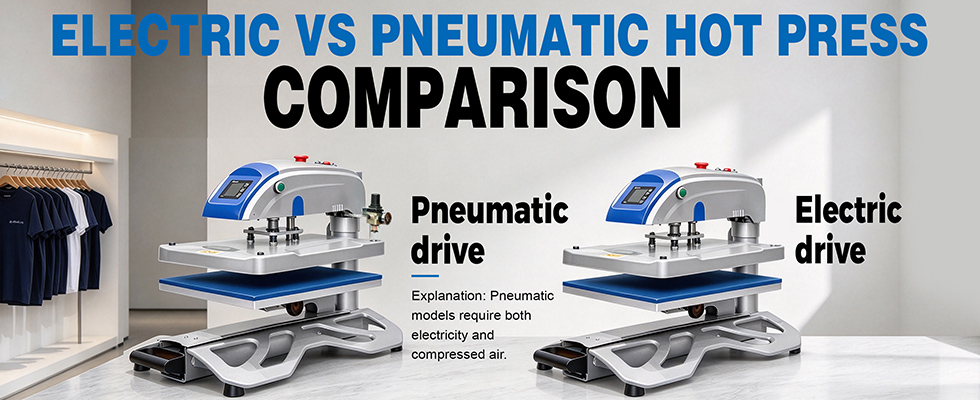
Suggested image: Show the two machine types side by side. Identify the pressing drive and show that the pneumatic model needs both electricity and compressed air.
An electric-drive heat press uses a motor and a mechanical transmission or actuator to move the pressing assembly. Depending on the design, the operator starts a cycle using a button, foot pedal, or other control. The machine then performs the powered movements included in that configuration.
Pressure adjustment may involve a controller setting, a mechanical adjustment, or a combination of both. A digital display does not necessarily mean the machine measures actual platen force. Ask the supplier what the displayed value represents and whether force feedback is included.
For businesses without compressed-air infrastructure, removing the compressor requirement can make the workstation easier to install and relocate. It also avoids compressor noise and air-system maintenance, although the machine itself still produces operating noise and requires servicing.
An electric drive does not automatically make garment loading, artwork positioning, or station movement automatic. Confirm each function individually, especially when comparing machines described as fully automatic.
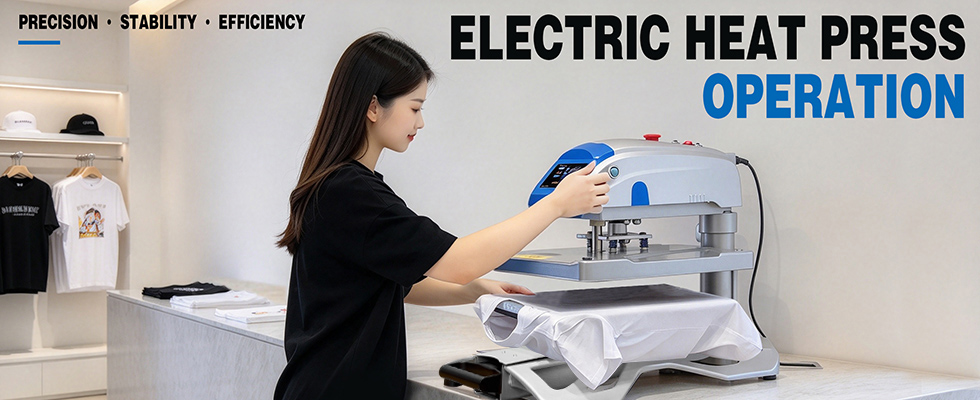
Suggested image: Show a real electric heat press during a pressing cycle, with its controls and pressing area visible. Match the operation to the actual model.
A pneumatic heat press directs compressed air through valves to a cylinder. The cylinder converts air pressure into mechanical force, while the machine controls the pressing sequence and dwell time according to its design.
The air supply must provide both the operating pressure and the airflow required during production. A compressor that can reach the specified pressure may still be too small to supply repeated cycles or several machines at once.
Ask the manufacturer for:
· Required operating air pressure
· Air consumption per cycle or at the intended production rate
· Air-quality requirements and filtration or drying needs
· Recommended hose size, fittings, and connection details
Pneumatic equipment can suit repetitive commercial production, particularly where a suitable air system already exists. However, unstable supply pressure, air leaks, or restricted hoses can affect operation. The compressor, piping, and press must be evaluated as one working system.
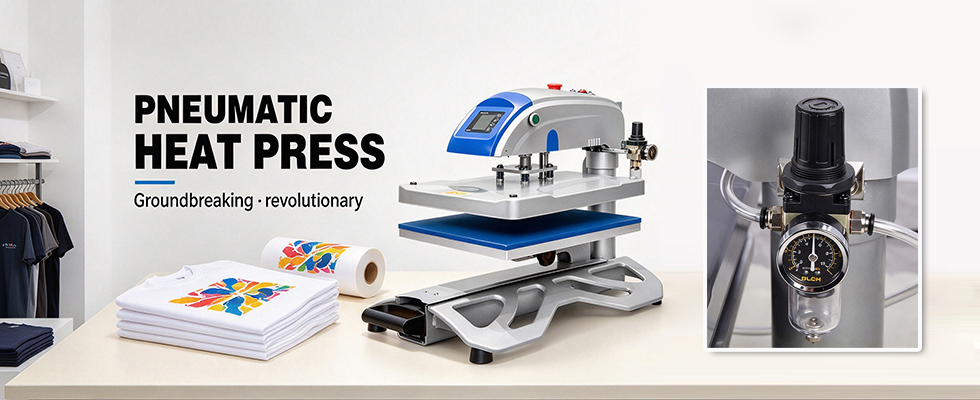
Suggested image: Show the machine's actual air hose, pressure regulator, and electrical connection. Label the power and compressed-air connections clearly.
The following comparison describes common design differences. Exact capabilities depend on the model, platen size, controls, and working structure.
Comparison Area | Electric Drive | Pneumatic Drive |
Pressing force | Motor or electric actuator | Compressed-air cylinder |
Utilities | Electricity | Electricity and compressed air |
Installation | No external air system for pressing | Suitable air supply and connections required |
Adjustment | Depends on motor, mechanism, and controls | Commonly uses an air regulator and machine controls |
Noise sources | Motor and moving components | Air exhaust, moving components, and compressor |
Service focus | Drive, actuator, sensors, and controls | Air lines, valves, seals, and controls |
Production rate | Depends on the full cycle and layout | Depends on the full cycle and layout |
Typical consideration | Convenient where air is unavailable | Practical where suitable air is already installed |
Neither drive type alone establishes transfer quality, maximum useful output, or operating cost. Those results require a comparison of the actual machines under comparable production conditions.
For pneumatic machines, the pressure shown on an air regulator refers to the air pressure at that point in the pneumatic circuit. It is not automatically the contact pressure applied across the garment or transfer area. Cylinder dimensions, mechanical geometry, platen area, and losses affect the result.
Ask whether a specification describes air pressure, total pressing force, or average platen contact pressure. A force quoted in kilograms may mean kilogram-force; request a clear definition and comparable units before using it to rank machines.
Electric-drive machines also need careful evaluation. Maximum force, adjustment range, repeatability, and behavior with different garment thicknesses depend on the drive and frame design. Do not assume an electric machine is less powerful simply because it does not use air.
The drive system does not establish the quality of the heating platen. Compare temperature uniformity, recovery during repeated cycles, platen flatness, and the condition of the lower pad.
Use the transfer supplier's recommended temperature, dwell time, pressure, and peeling procedure as the starting point. More heat or pressure can damage a garment or distort a transfer. Evaluate finished results on representative materials instead of choosing the highest specification.
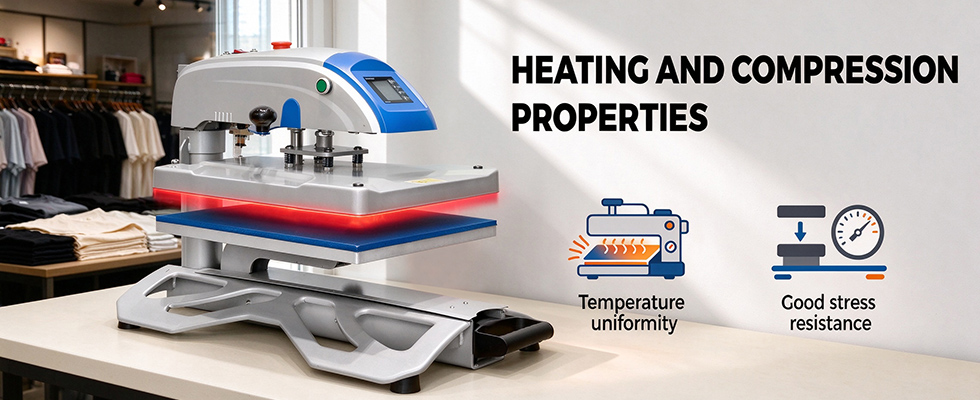
Suggested image: Combine real photographs of platen temperature testing and finished transfer inspection. Show the actual test method without adding unverified temperature or pressure results.
A quoted pressing time rarely describes the entire production cycle. Daily output also depends on loading, alignment, pre-pressing, station movement, peeling, any required second press, unloading, and quality checks.
For example, assume a single-station workflow takes 15 seconds to press and another 15 seconds to complete the remaining sequential tasks. The theoretical rate is 120 pieces per hour before breaks, changeovers, rejects, or other delays. These figures illustrate the calculation and are not a machine performance claim.
A fast closing mechanism provides limited benefit if positioning the transfer is the main bottleneck. Ask for a timed demonstration using your garment type and complete transfer process, then record acceptable finished pieces per operator hour.
A dual-station machine can allow the operator to prepare one platen while the other is pressing. The benefit depends on safe loading access, transfer dwell time, station movement, and the amount of manual work required.
If preparation takes longer than pressing, a second station may not double output. Both electric and pneumatic dual-station systems should be evaluated using the same workflow. Choose the layout and drive together rather than treating pneumatic operation as proof of higher productivity.
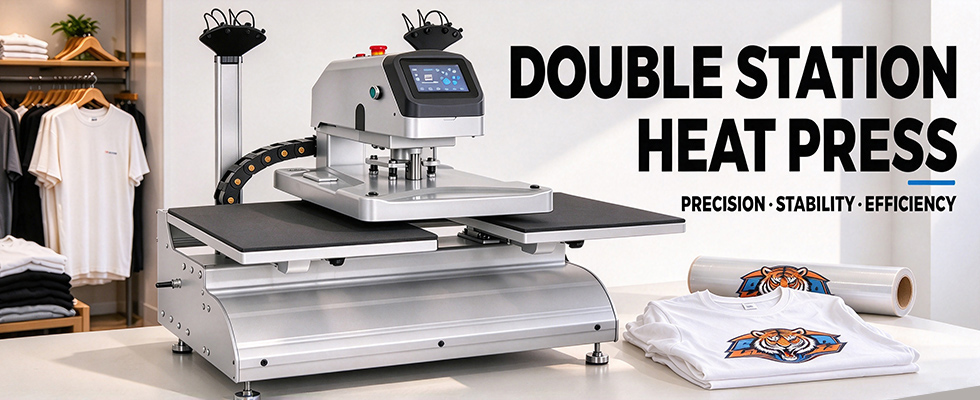
Suggested image: Show one station pressing while the operator prepares the other in the designated safe loading area. Use arrows to explain the sequence without adding untested output figures.
Confirm the rated voltage, frequency, phase, power, current, plug, and circuit requirements for the exact machine. Check simultaneous electrical demand if the workstation includes a compressor or other equipment.
An electric-drive press eliminates the air connection for pressing, but it still requires a suitable electrical installation. A pneumatic press needs power for heating and controls in addition to its air supply.
For pneumatic equipment, review compressor capacity at the required working pressure, air consumption, receiver capacity, and the number of machines sharing the supply. Include compressor duty cycle, filtration, condensate handling, and hose routing in the installation plan.
Allow space for the machine's full operating movement, garment loading, operator access, and maintenance. Swing-away heads and moving dual-station assemblies can require more clearance than their static dimensions suggest.
Check noise under working conditions. An electric machine may avoid compressor and air-exhaust noise, but neither category should be described as silent without model-specific evidence.
Machine price is only the starting point. Compare freight, installation, accessories, energy, labor, maintenance, spare parts, and the cost of production interruptions over a realistic ownership period.
For a pneumatic system, include a compressor if one is needed, along with air treatment, piping, servicing, and the electricity used to produce compressed air. An existing air system can reduce the installation expense, but its spare capacity and operating cost still matter.
For an electric system, review the purchase price and service requirements of the drive components. Avoid assuming that removing the compressor makes every electric model cheaper over its lifetime.
A useful comparison is total production cost divided by the number of acceptable finished pieces. Measure both systems using the same product, transfer settings, staffing, working hours, and quality standard.
Nameplate power does not equal measured energy use. When energy cost affects the purchase decision, obtain representative operating measurements for the complete system, including the compressor where applicable. Avoid percentage-saving claims that do not explain the test conditions.
Electric machines may require inspection of the actuator, transmission, moving joints, sensors, wiring, and controls. Pneumatic systems may require inspection of hoses, fittings, filters, regulators, valves, and cylinder seals, as well as compressor maintenance.
Both types also depend on heaters, temperature sensors, controllers, platen alignment, and lower pads. Follow the model's maintenance schedule and air-treatment requirements. Do not add an air lubricator unless the manufacturer specifies one for that system.
Before ordering, confirm:
· Routine service tasks and recommended intervals
· Common wear parts and their identification numbers
· Spare-parts availability and expected delivery time
· Diagnostic instructions and remote support arrangements
· Warranty coverage, exclusions, and replacement-part shipping responsibility
A machine that can be diagnosed and repaired promptly may offer better production value than a lower-priced machine with unclear support. Ask for the service process in writing, especially when importing equipment.
Suggested image: Show routine inspection, replacement parts, and support documents for the actual machine. Include only parts and services confirmed for that model.
An electric-drive press is a sensible starting point when you want powered pressing without installing an air system. Check that its platen size, adjustment range, cycle performance, and duty rating support your intended workload.
A pneumatic press can be practical when sufficient clean, dry air is already available. Verify the supply at the workstation while other equipment is operating, and confirm that the machine meets the required transfer quality and output.
Evaluate loading access, interchangeable lower platens, recipe settings, and single- versus dual-station operation. Include pre-pressing, peeling, and any finishing press required by the transfer supplier. The workflow around the machine can matter as much as the drive.
For mixed garments, thick seams, sleeves, patches, or larger graphics, compare platen options, usable loading clearance, pressure adjustment, and changeover time. Required force and heating performance must be checked for the actual working area rather than inferred from the electric or pneumatic label.
Give the supplier a clear production brief. Include your products, fabric types, artwork dimensions, transfer process, required daily output, working hours, available power, and compressed-air conditions.
Request model-specific answers to these questions:
· Which pressing and station movements are automatic?
· What platen sizes and accessories are included or optional?
· How is force adjusted, displayed, and verified?
· What are the electrical and compressed-air requirements?
· Can the machine be demonstrated with representative garments and transfers?
· What output is achievable with the complete process and stated staffing?
· Which safety functions are fitted, and how do they operate?
· What manuals, parts information, warranty, and support are supplied?
Ask for a complete cycle video and a repeat-run sample test. Confirm the exact configuration, package dimensions, gross weight, lead time, and documentation relevant to the destination market. Claims made for one configuration should not be assumed to apply to another.
Automatic opening, automatic closing, automatic station movement, and automatic loading are separate functions. A machine may offer only some of them. Map the operator's tasks before assigning a value to the automation level.
Supply-air pressure and pressing force are different measurements. Likewise, heater power, maximum temperature, and platen size do not describe transfer quality on their own. Request matching definitions and comparable test conditions.
A pieces-per-hour figure needs a product, dwell time, handling sequence, operator count, and quality standard. Include all required pressing steps and identify whether the figure is theoretical or measured.
A pneumatic machine needs dependable air, while an electric machine needs serviceable drive components. For either option, confirm local installation requirements and a realistic repair process before committing to the order.
Yes. Conventional pneumatic heat presses generally use electricity for the heater and controls, while compressed air supplies the pressing action. Confirm both utility requirements for the exact model.
A machine with fully electric pressing normally does not need an external compressor for that function. Confirm whether any additional mechanism or accessory uses compressed air, since supplier descriptions can vary.
Either can be suitable when temperature, pressure, dwell time, platen size, and handling match the transfer system. Test your garments and transfers using the supplier's recommended application and peeling procedure.
No. Force and speed depend on the specific machine. Compare pressing capability, cycle movements, station layout, and complete production performance using equivalent test conditions.
No. Avoiding compressed air removes one utility requirement, but total cost also depends on machine price, energy use, labor, maintenance, output, and downtime. Compare the complete systems in your facility.
Consider one when preparation and pressing can safely overlap and your order volume justifies the additional space and investment. Verify the benefit with a timed production trial rather than assuming output will double.
An electric heat press can make powered pressing easier to install where compressed air is unavailable. A pneumatic heat press can fit an established factory air system and repetitive production requirements. Neither is the universal answer for every business.
The stronger purchasing decision comes from matching the pressing mechanism, station layout, platen performance, utilities, and service support to your actual workflow. Compare representative samples and complete production cycles, then evaluate the cost per acceptable finished piece.
Share your products, transfer process, and output requirements with our team to discuss the electric or pneumatic heat press configuration that fits your production plan.


